DEUTSCH
Der zweite Akt setzt fort, was der erste eröffnete — doch er verschiebt den Schauplatz. War der erste der Schnitt am eigenen Körper, das Ablegen eines aufgezwungenen Selbst, so verlässt das Selbst hier beinahe das Bild. An die Stelle des entblößten Körpers tritt die Landschaft, in die er sich ausgelagert hat: Wege, Grenzen, Reste. Das Werden, das im ersten Akt am eigenen Leib begann, schreibt sich nun in die Welt ein.
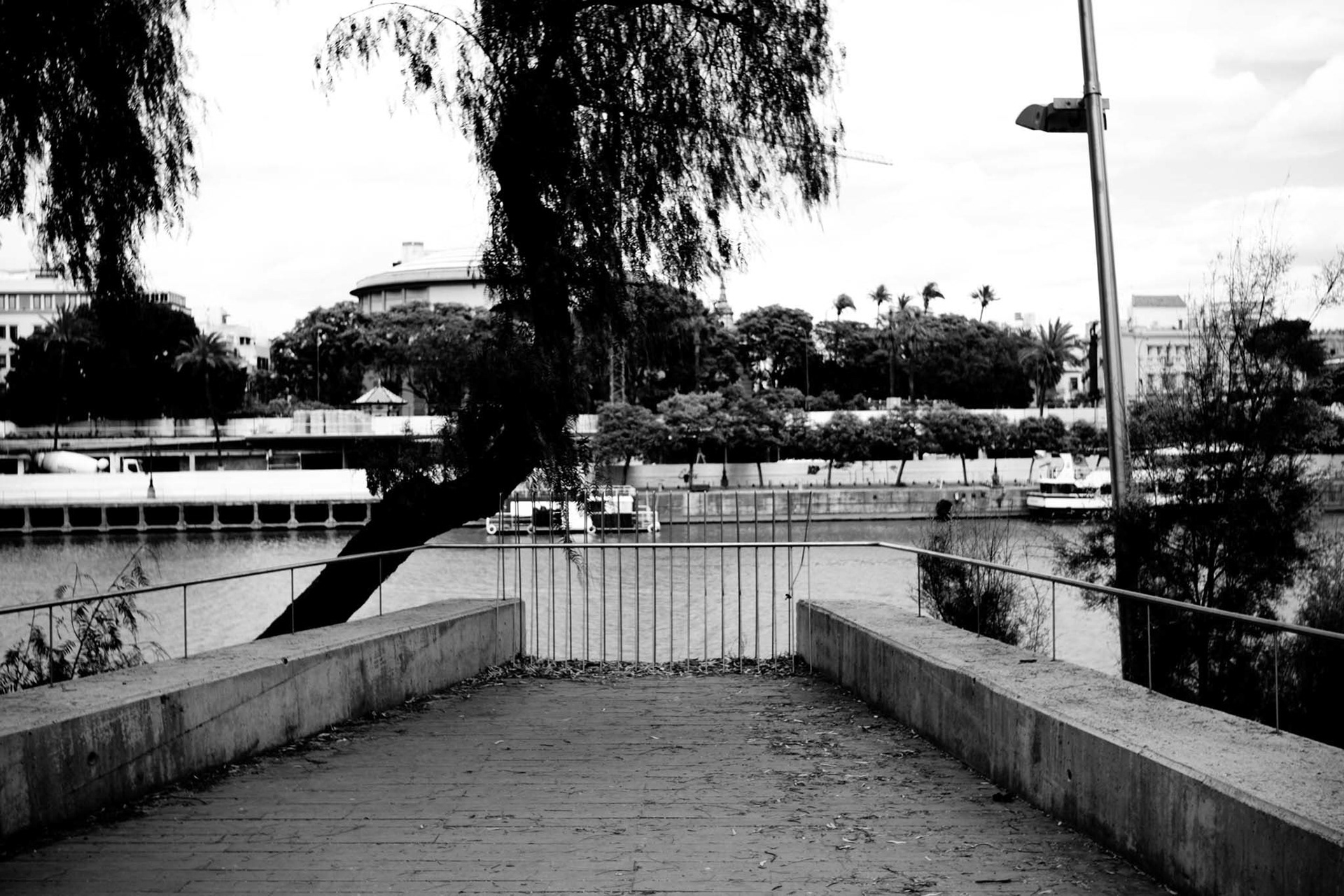
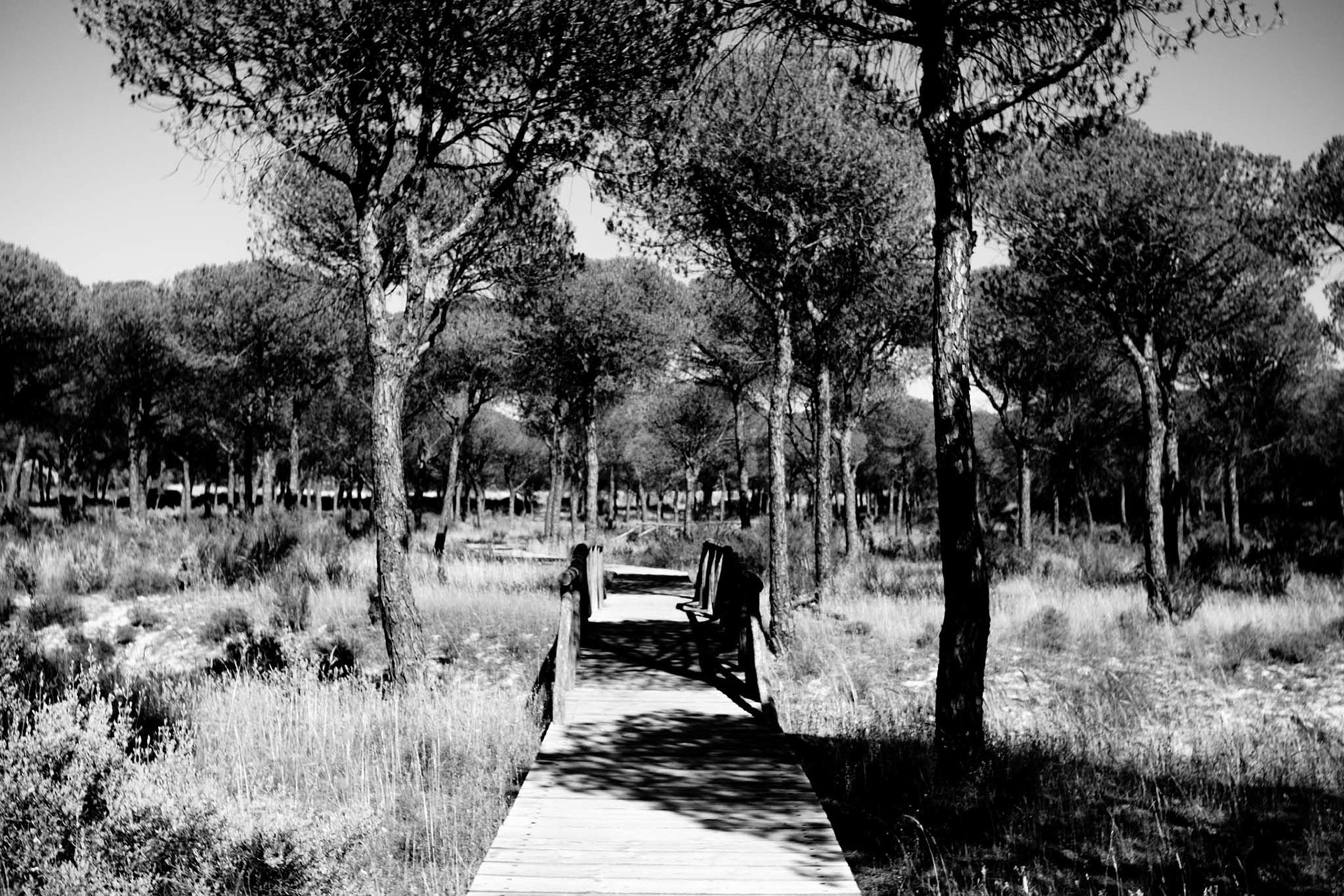
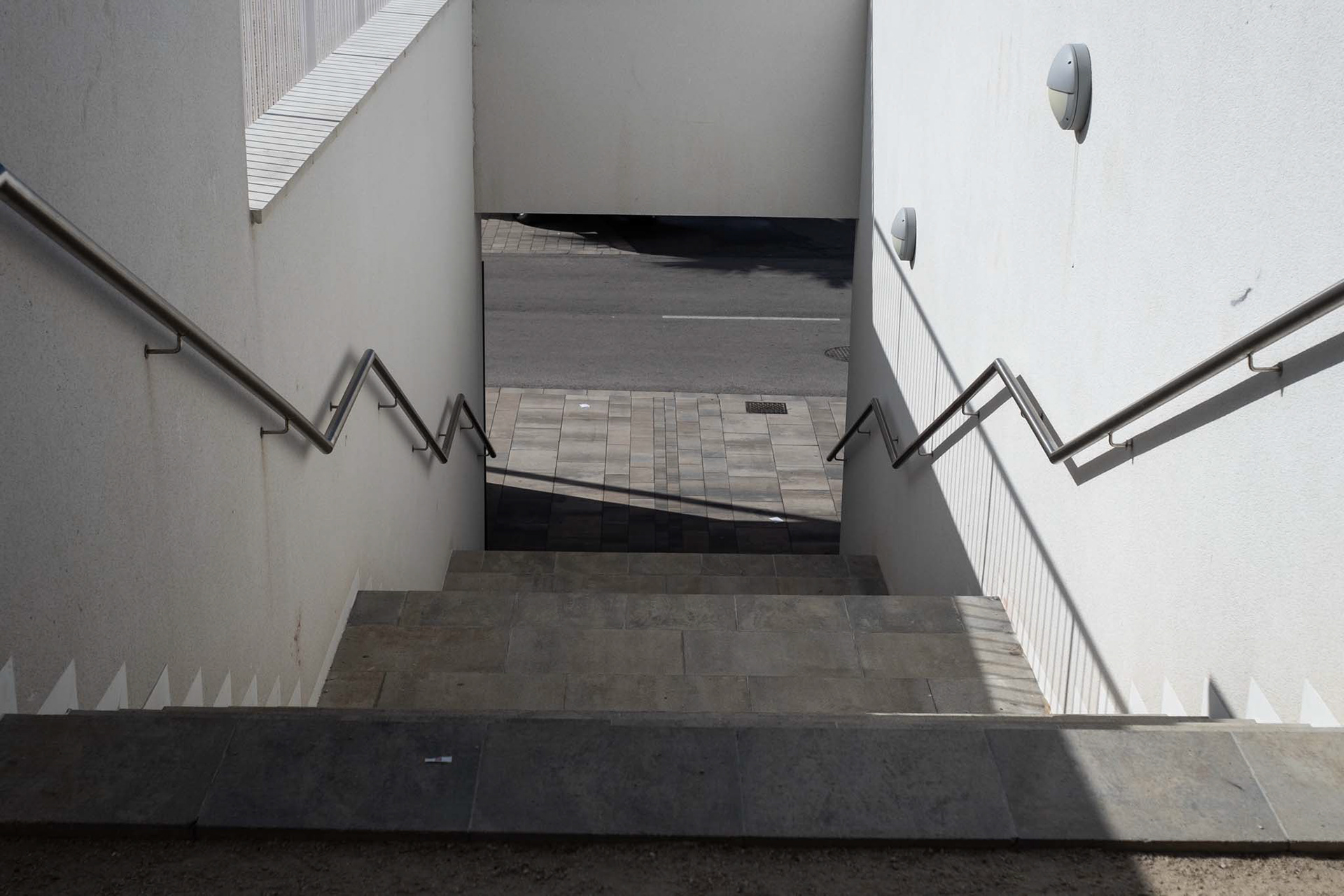
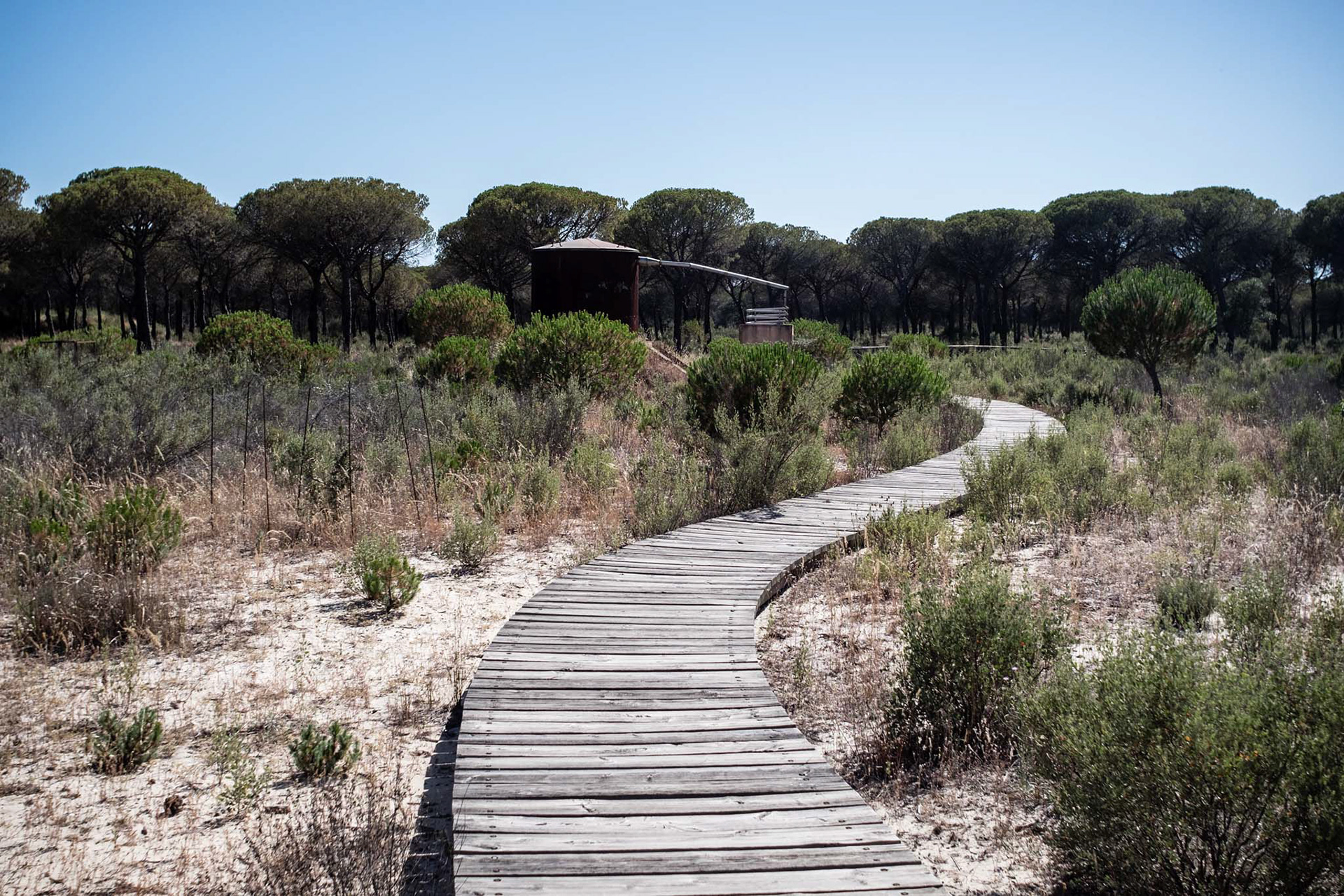
Wieder und wieder ein Weg: ein Steg durch den Kiefernwald, eine Rampe zum Fluss, eine Treppe, die zur Straße hinabführt, ein Bohlenweg, der sich durch die Dünen krümmt. Es sind Linien des Werdens — sie führen, doch ihr Ende bleibt offen, hinter dem Fluchtpunkt, hinter der Kurve. Man geht sie ab, ohne anzukommen; das ist der Modus dieses Akts: unterwegs, nicht angelangt.
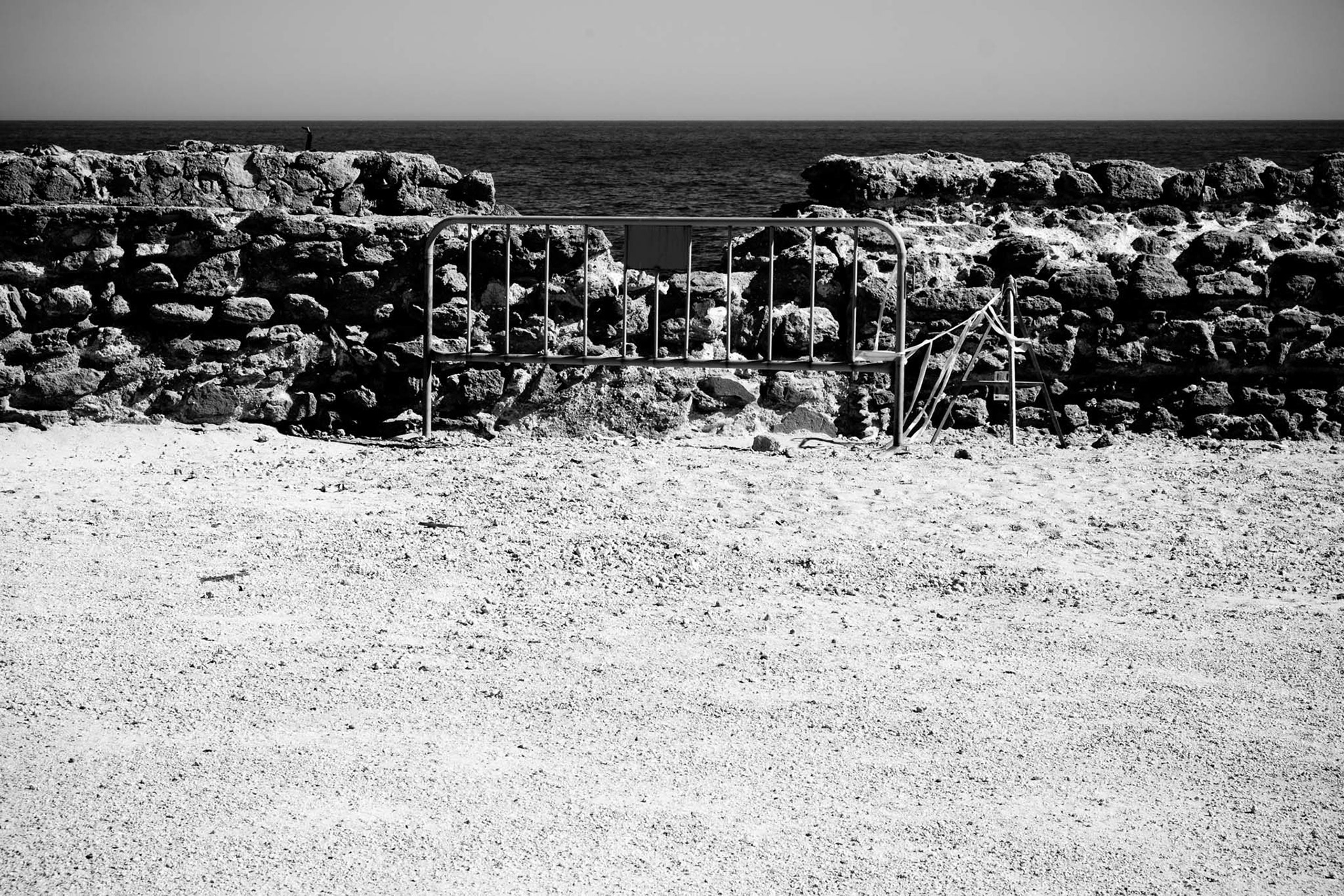
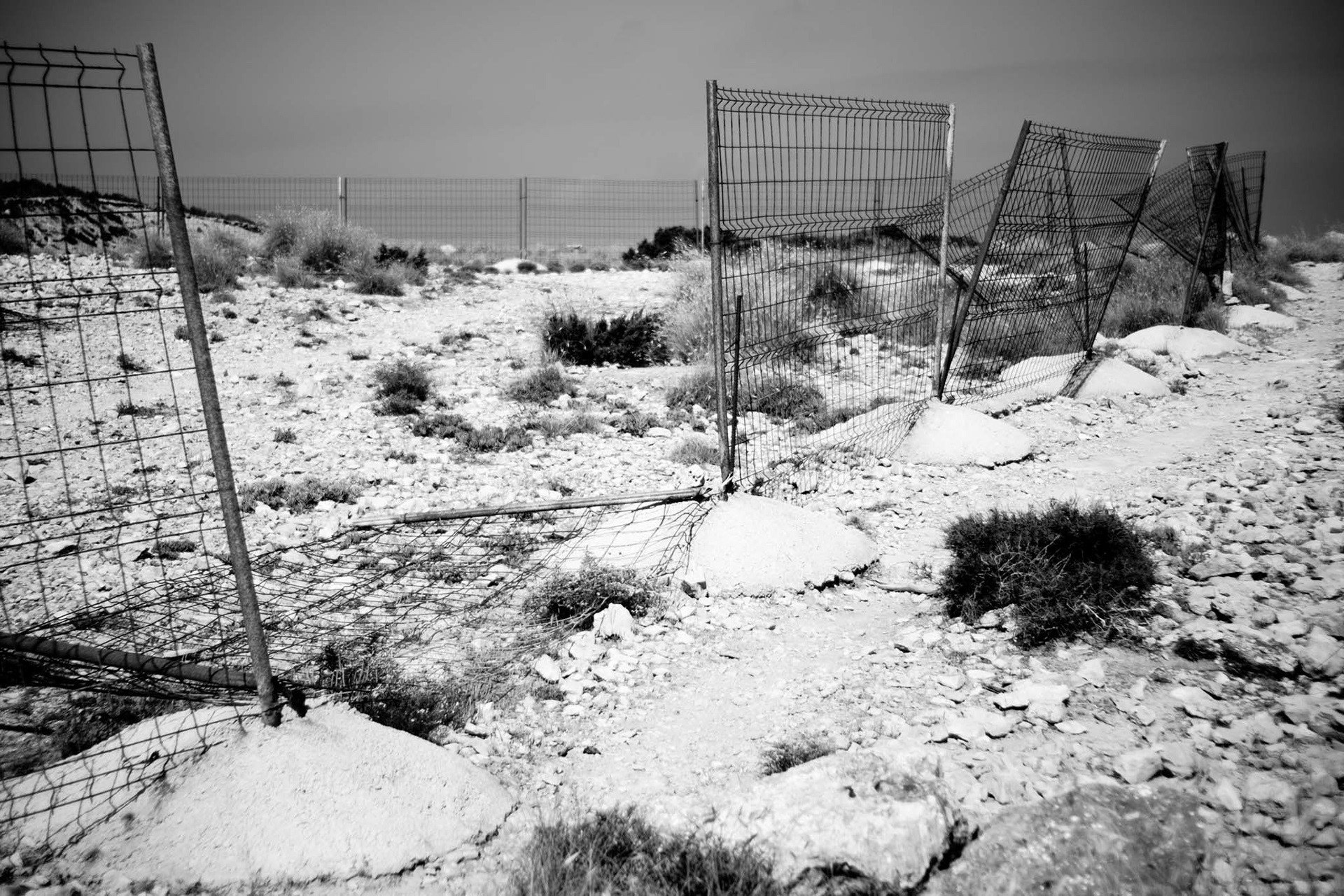
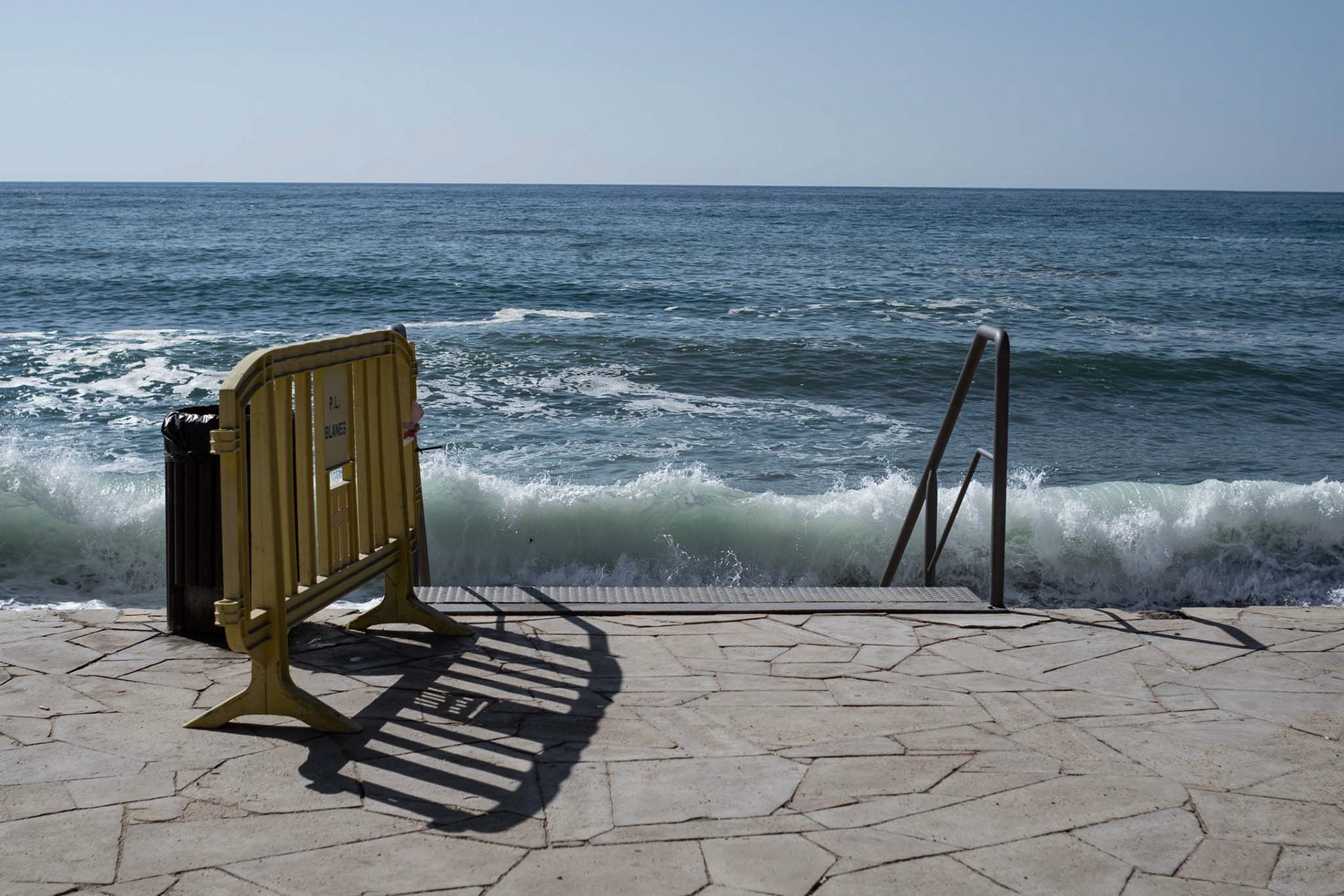
Und überall Grenzen, die nicht mehr halten. Ein umgestürzter Maschenzaun im Geröll, eine Absperrung sinnlos in den Sand gestellt, ein Gitter vor dem offenen Meer. Was im ersten Akt als Deterritorialisierung eines Namens begann, kehrt hier als Bild wieder: Die Schranke steht noch, aber sie trennt nichts mehr. Das aufgezwungene Selbst hat seine begrenzende Kraft verloren.
Und überall Grenzen, die nicht mehr halten. Ein umgestürzter Maschenzaun im Geröll, eine Absperrung sinnlos in den Sand gestellt, ein Gitter vor dem offenen Meer. Was im ersten Akt als Deterritorialisierung eines Namens begann, kehrt hier als Bild wieder: Die Schranke steht noch, aber sie trennt nichts mehr. Das aufgezwungene Selbst hat seine begrenzende Kraft verloren.
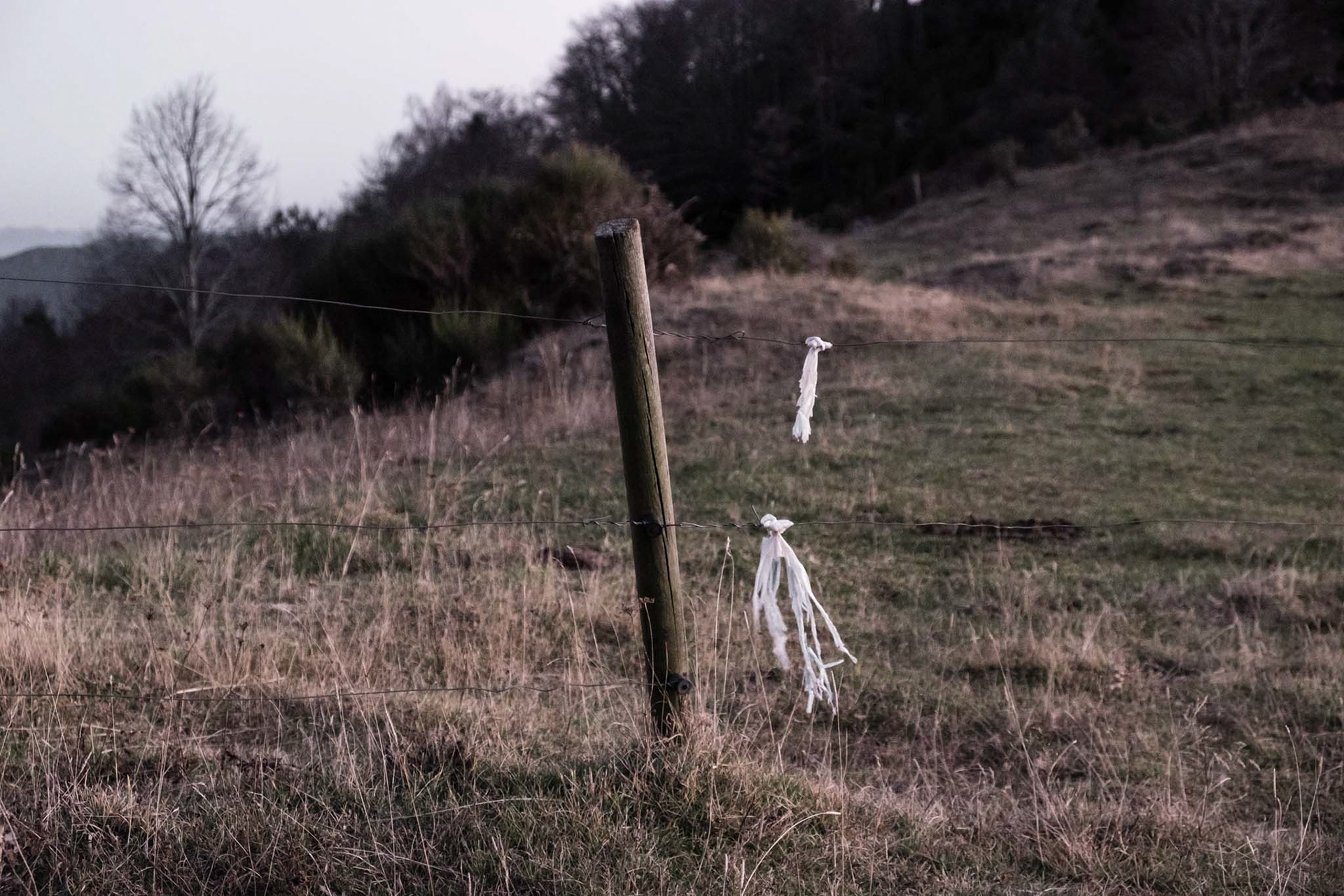
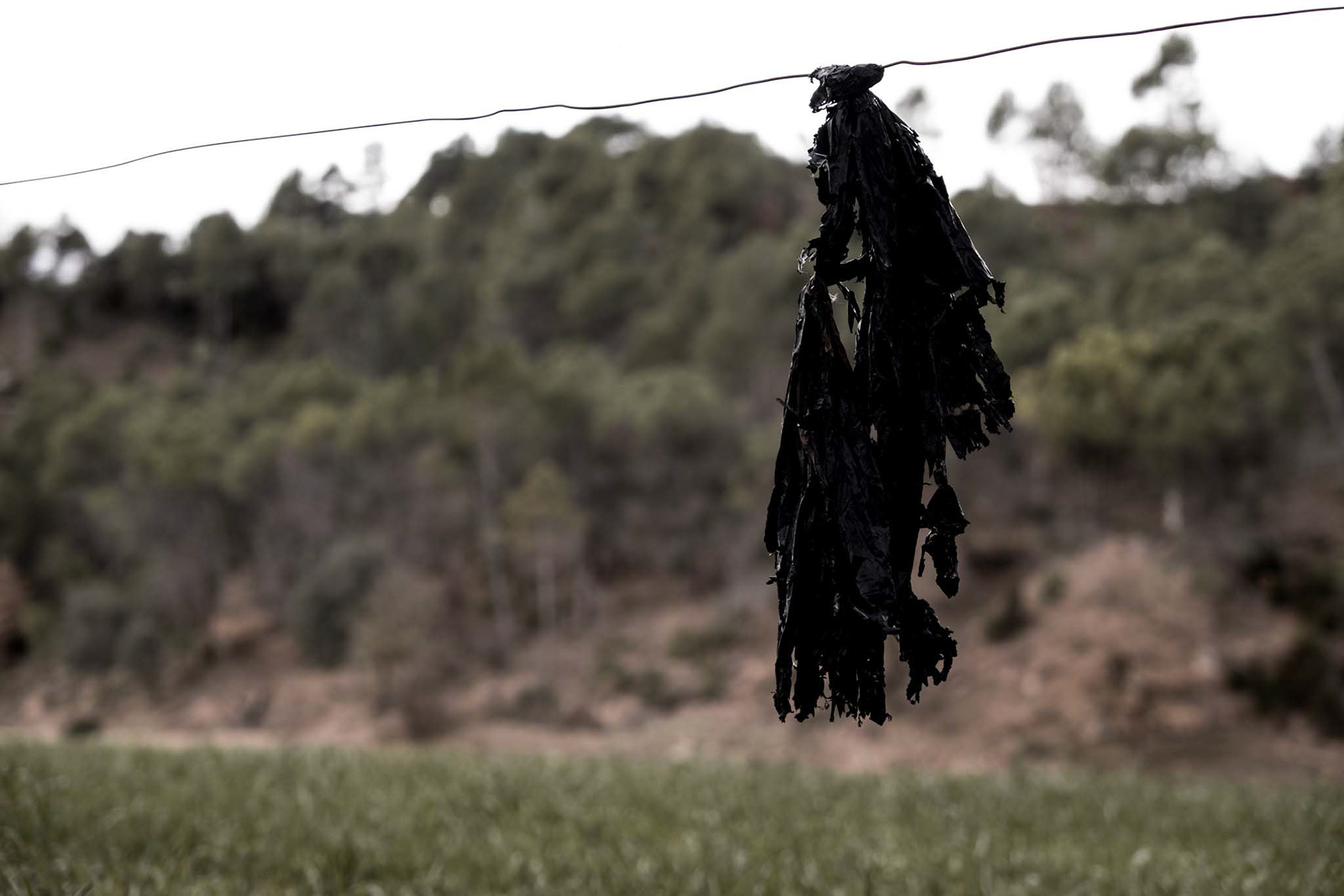
An den Drähten hängen Fetzen — einmal schwarz, einmal weiß, zerschlissen, im Wind. Sie haben etwas Anthropomorphes, wie abgelegte Häute, die der Übergang zurückgelassen hat. Was man abstreift, verschwindet nicht; es bleibt am Rand hängen, verwittert, kenntlich und fremd zugleich. Die beiden widerstreitenden Identitäten des ersten Akts sind hier als zwei Reste zu sehen — der dunkle und der helle —, beide an derselben Linie.
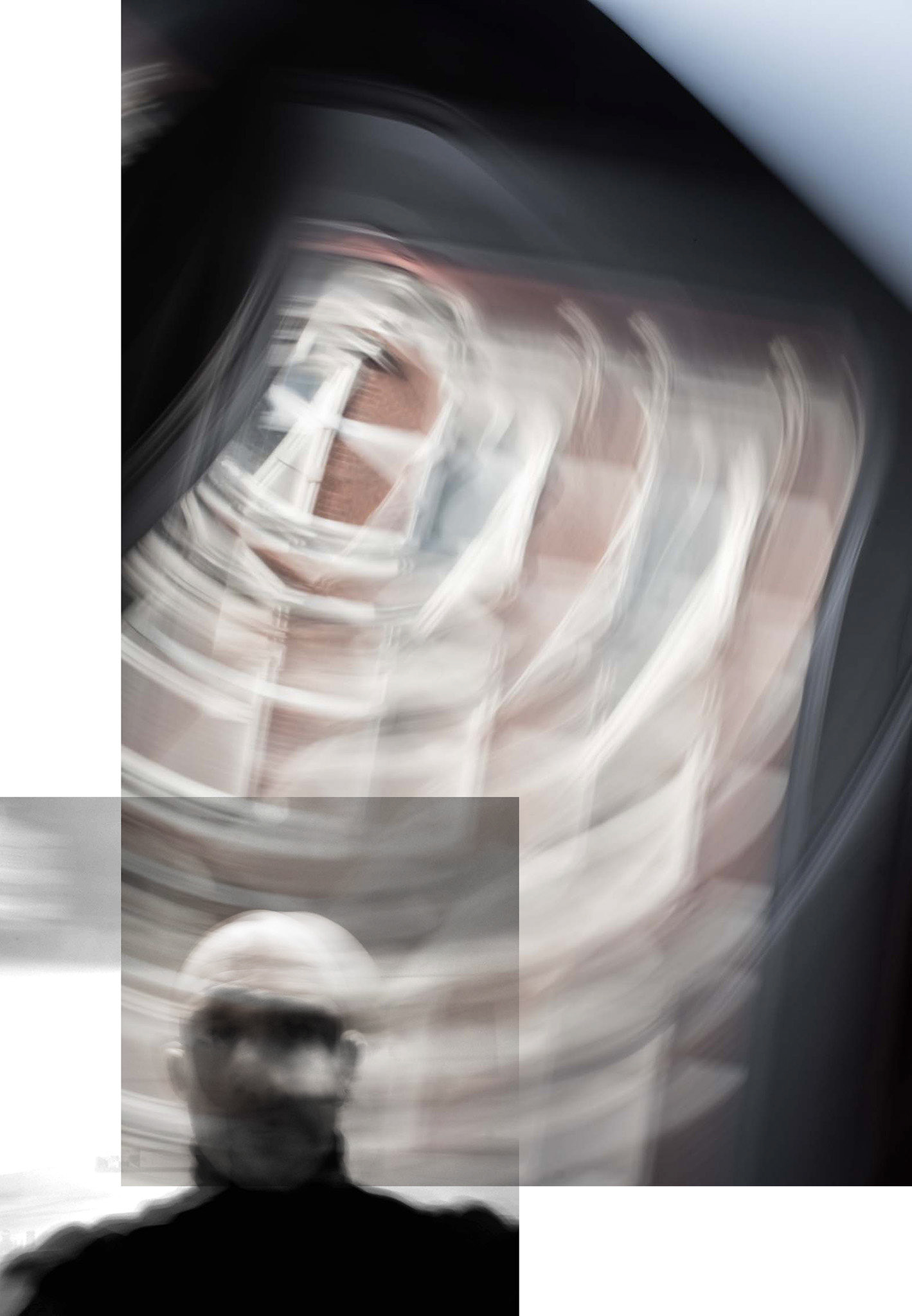
Nur ein einziges Mal kehrt der Körper ins Bild zurück, und auch dann nicht als Figur, sondern als Bewegung: ein Gesicht, das aus einer verwischten, montierten Unschärfe auftaucht, in rechteckige Felder zerlegt. Es ist die einzige Selbstdarstellung des Akts — ein Selbst im Vollzug, nicht im Stand, konstruiert statt abgebildet. Schwarz-Weiß und Farbe wechseln dabei durch die Serie wie die Schwankungen eines Zustands. Der zweite Akt zeigt das Werden nicht als erreichtes Ziel, sondern als Strecke: zwischen dem, was abgelegt wurde, und dem, was noch kommt. Die Philautia ringt weiter — nicht im Spiegel, sondern auf dem Weg.
ENGLISH
The second act continues what the first opened — but it shifts the scene. If the first was the cut into one's own body, the shedding of an imposed self, here the self almost leaves the image. In place of the bared body comes the landscape into which it has been externalised: paths, boundaries, remnants. The becoming that began, in the first act, on one's own body now inscribes itself into the world.
Again and again a path: a boardwalk through the pine wood, a ramp down to the river, a stairway descending to the street, a plank walk curving through the dunes. They are lines of becoming — they lead, yet their end remains open, behind the vanishing point, behind the bend. One walks them without arriving; that is the mode of this act: under way, not arrived.
And everywhere boundaries that no longer hold. A collapsed wire-mesh fence in the rubble, a barrier set pointlessly in the sand, a railing before the open sea. What began in the first act as the deterritorialisation of a name returns here as image: the barrier still stands, but it separates nothing any more. The imposed self has lost its limiting force.
On the wires hang shreds — black in one place, white in another, frayed, in the wind. They have something anthropomorphic about them, like cast-off skins the passage has left behind. What one sheds does not vanish; it stays caught at the edge, weathered, recognisable and foreign at once. The two conflicting identities of the first act are seen here as two remnants — the dark one and the pale one — both on the same line.
Only once does the body return to the image, and even then not as a figure but as movement: a face surfacing from a blurred, montaged haze, broken into rectangular fields. It is the only self-depiction of the act — a self in process, not at rest, constructed rather than depicted. Black-and-white and colour alternate across the series like the fluctuations of a condition. The second act shows becoming not as a goal attained but as a stretch of road: between what has been shed and what is still to come. Philautia struggles on — not in the mirror, but on the way.