DEUTSCH
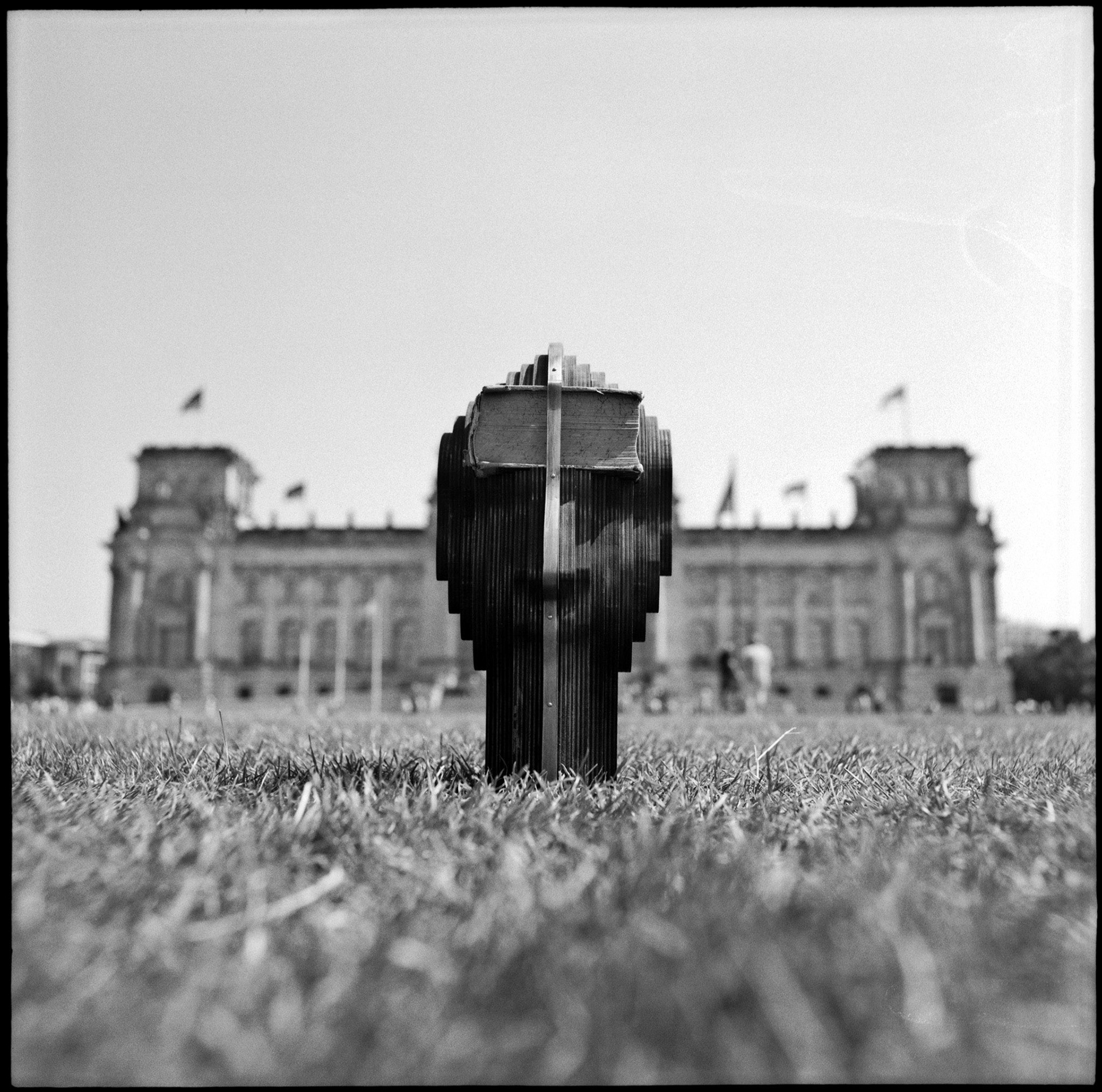
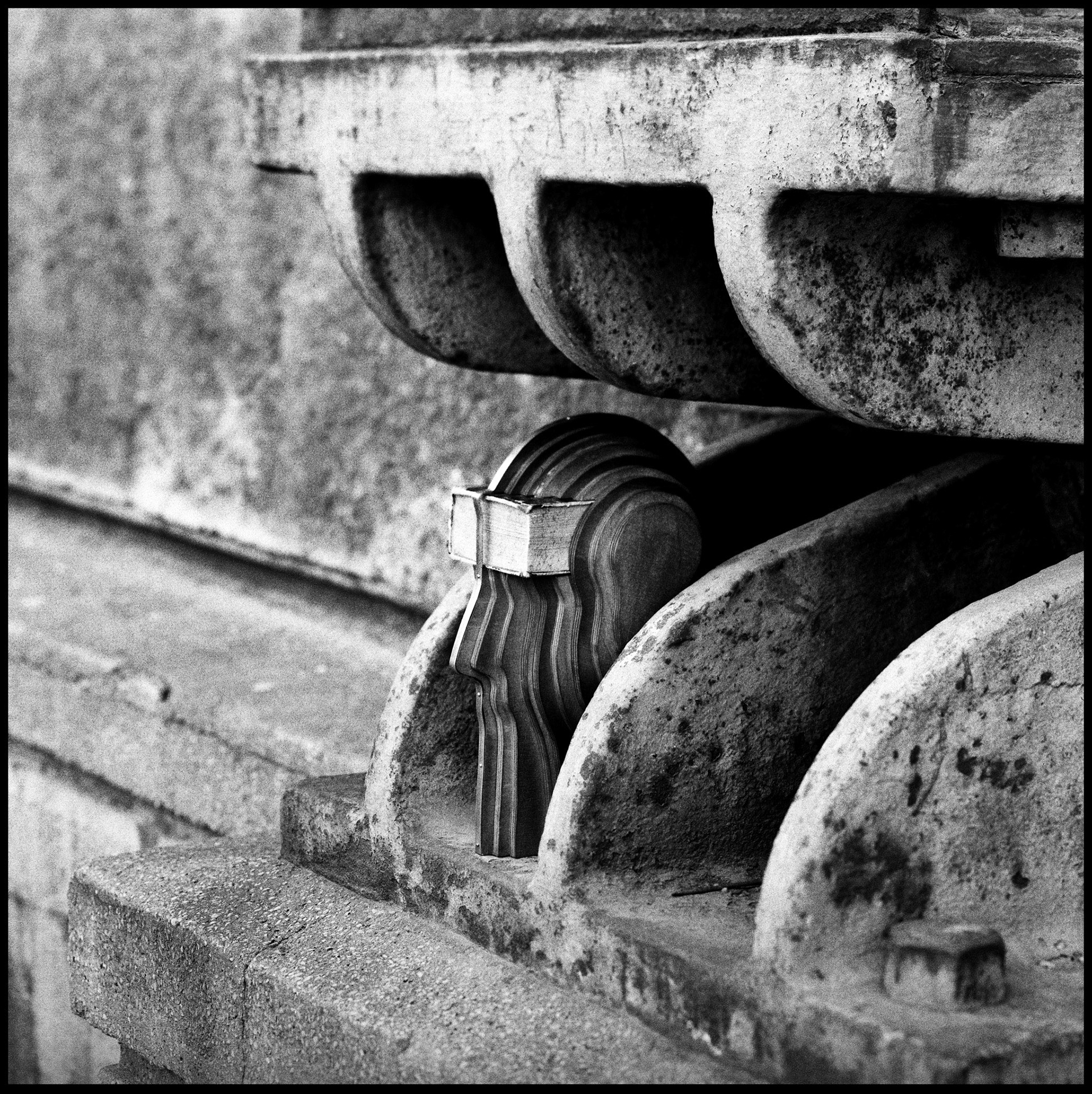
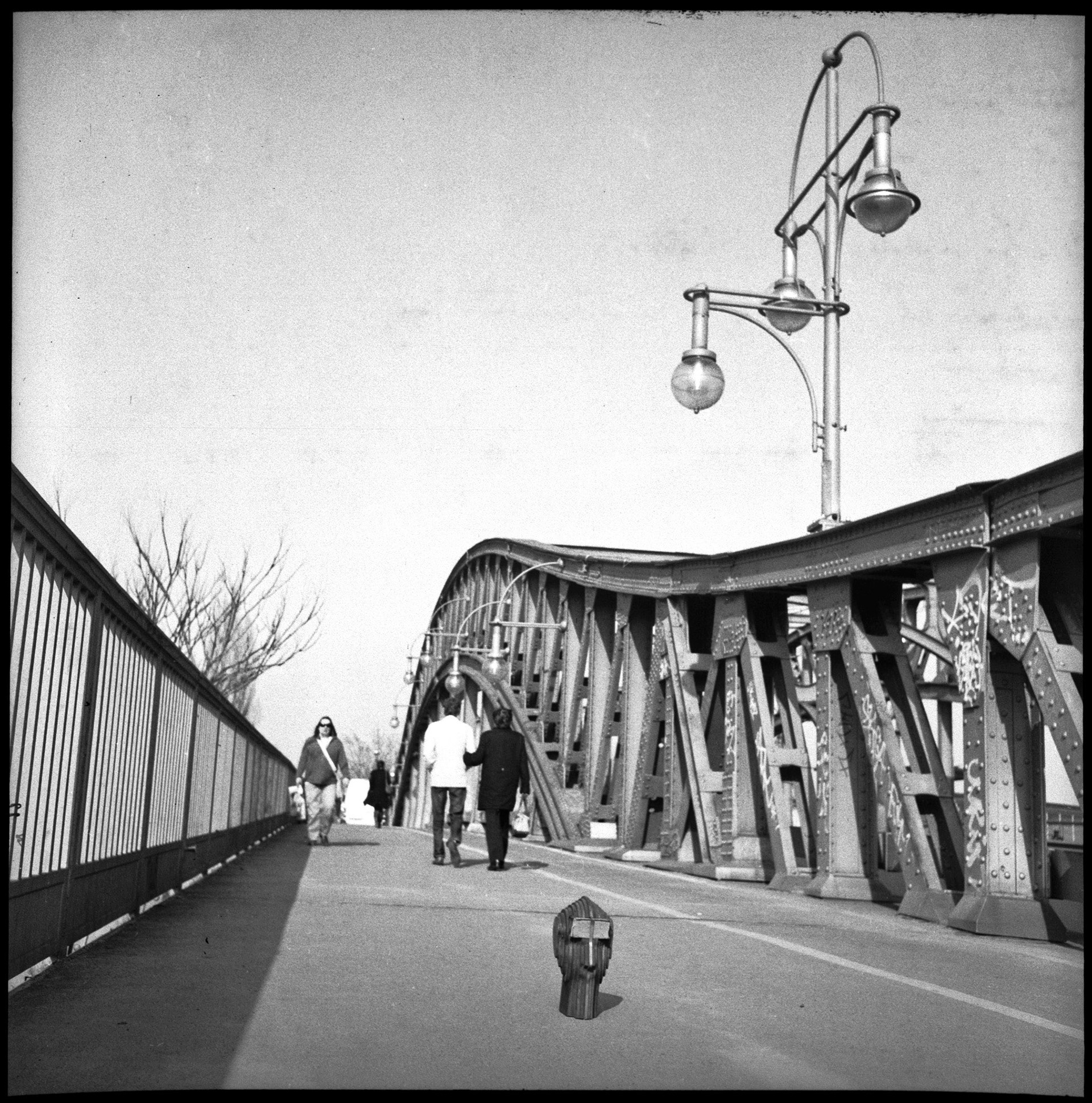
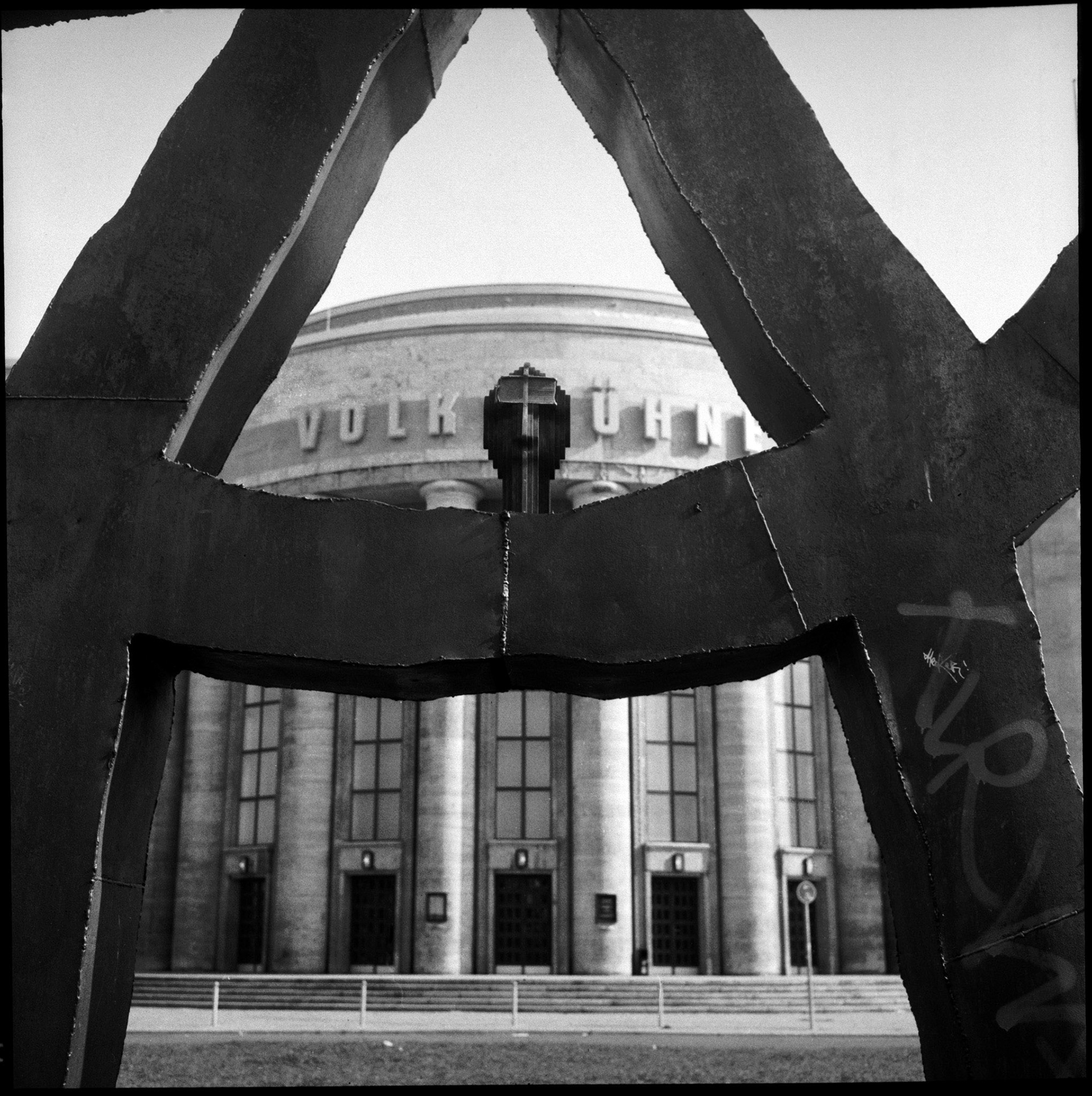
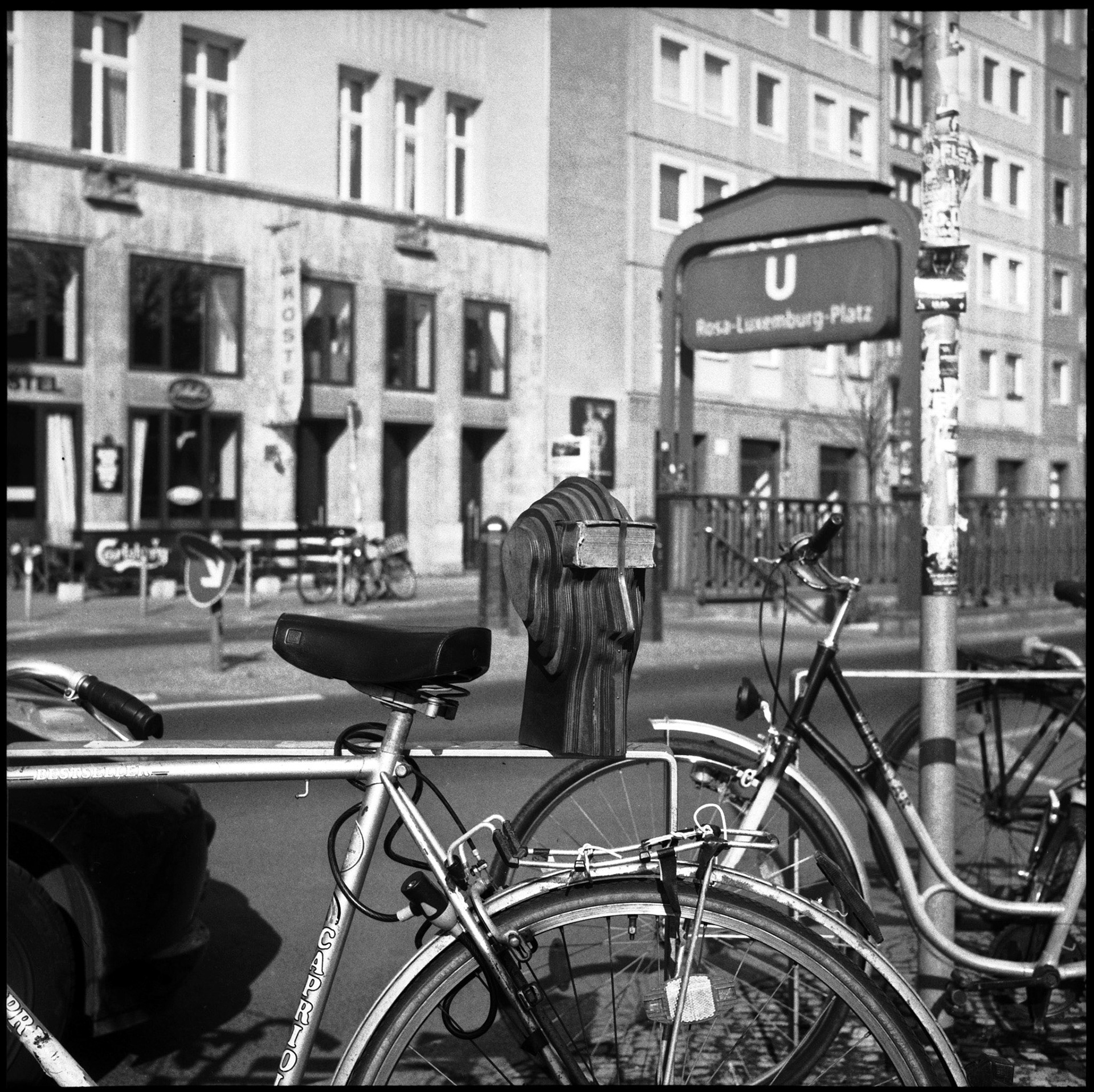
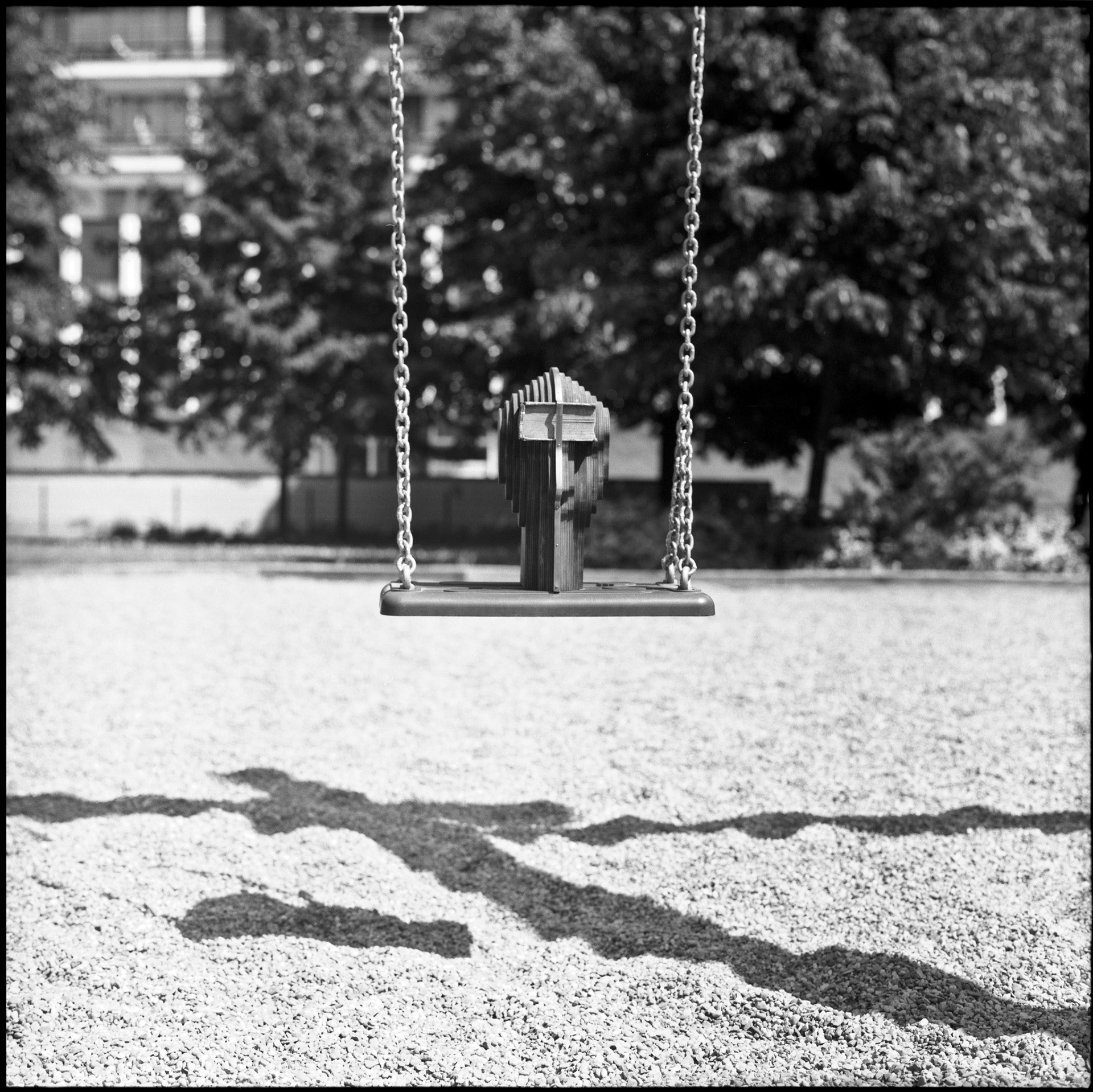
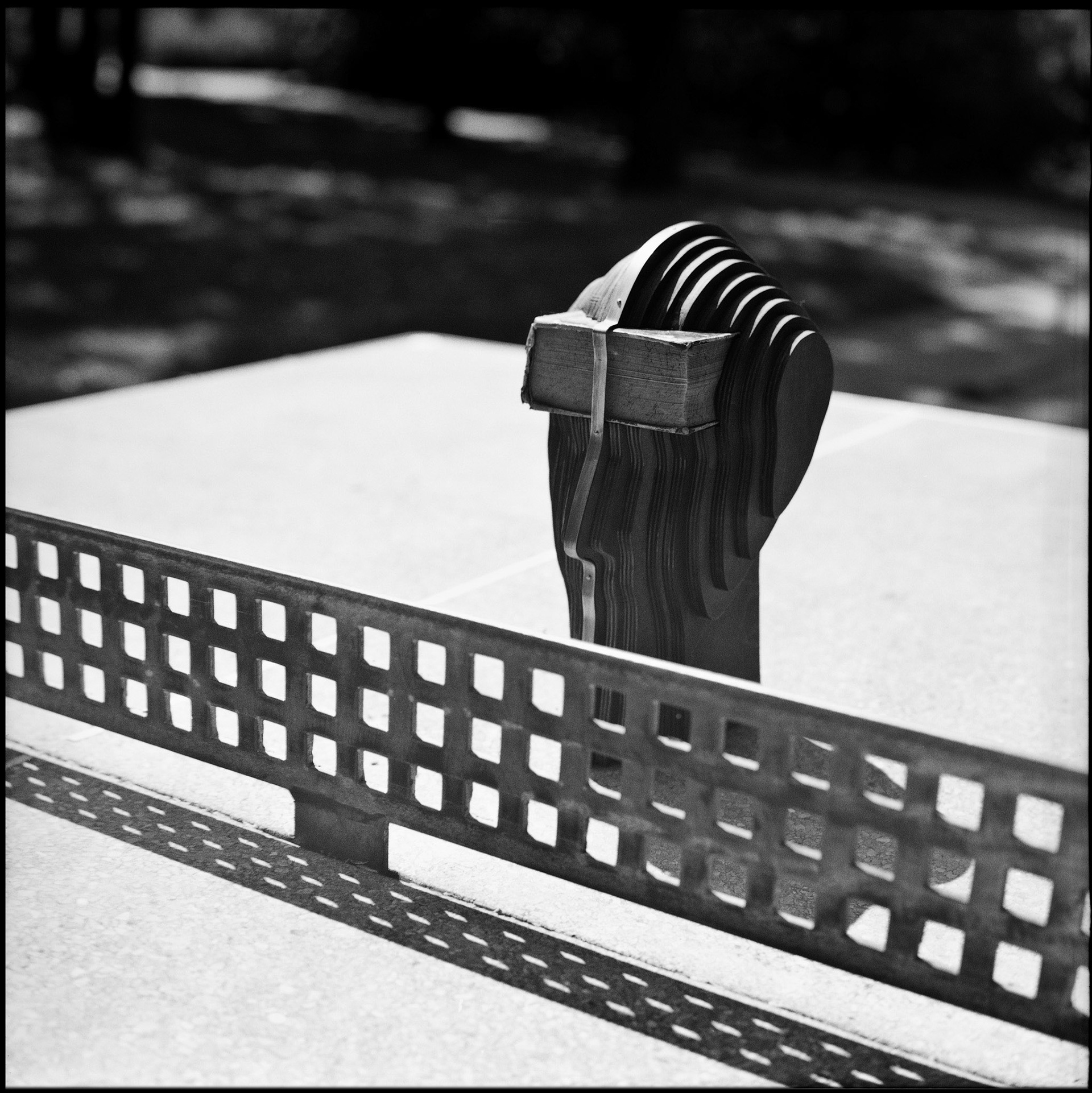
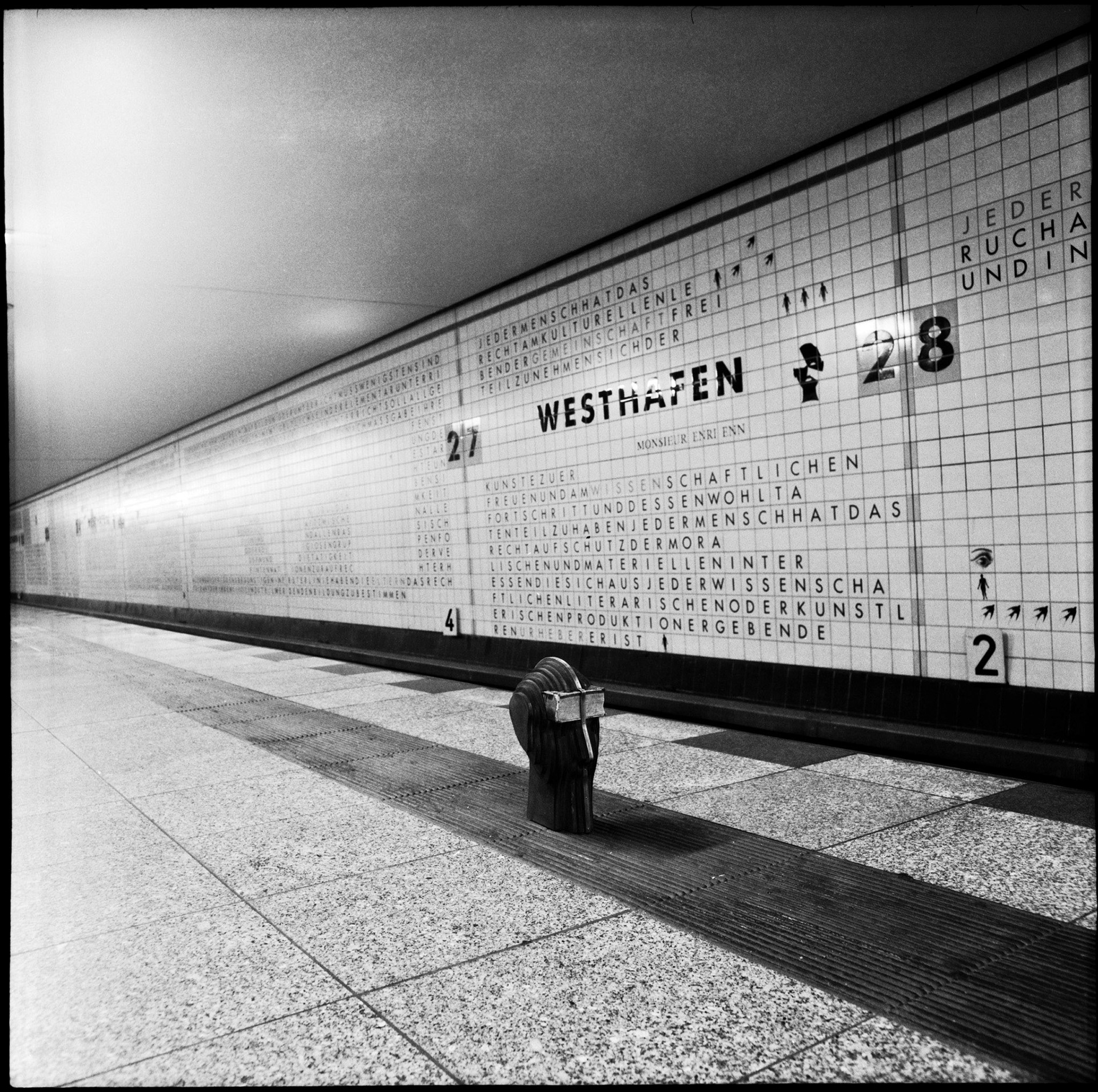
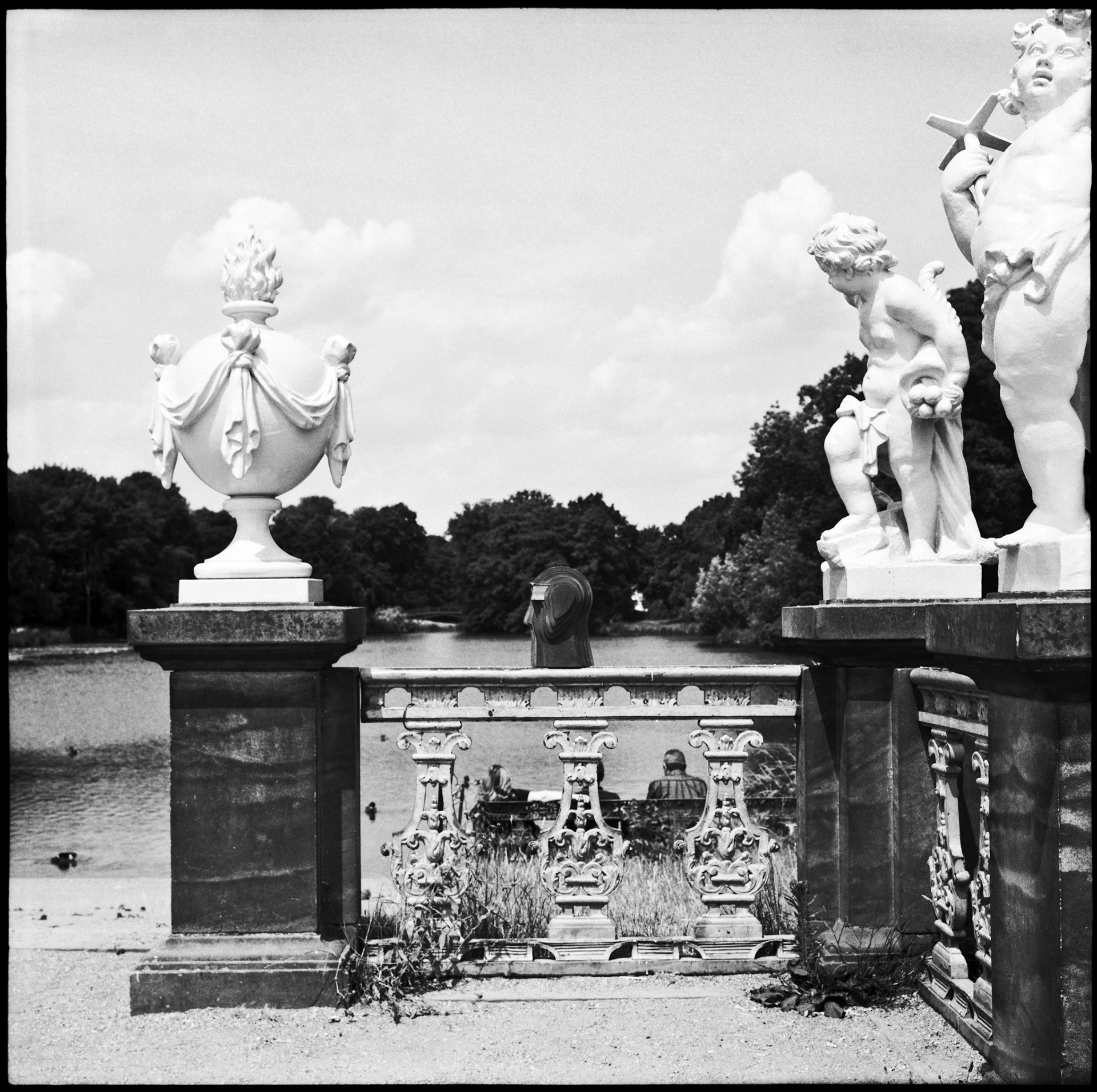
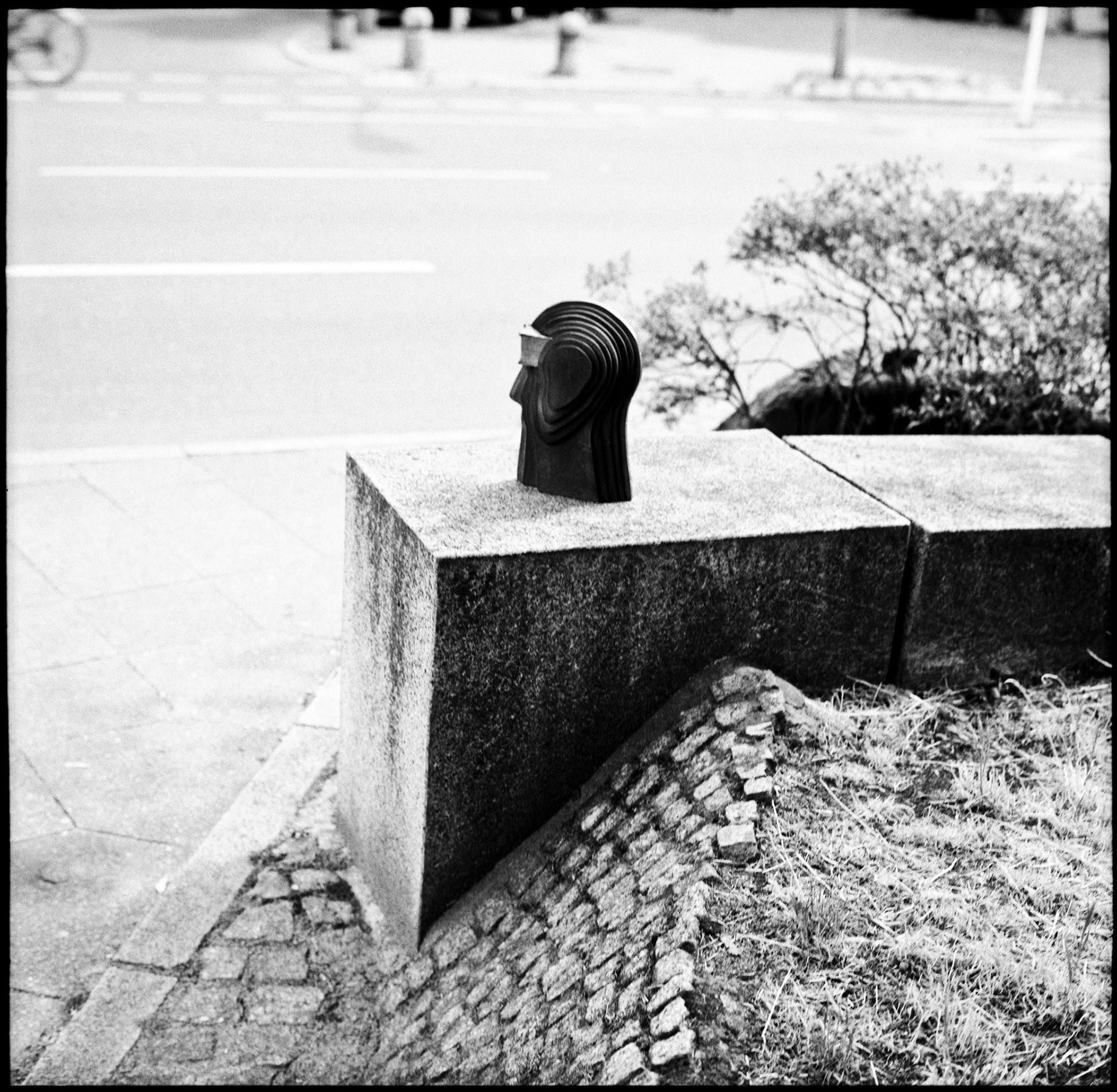
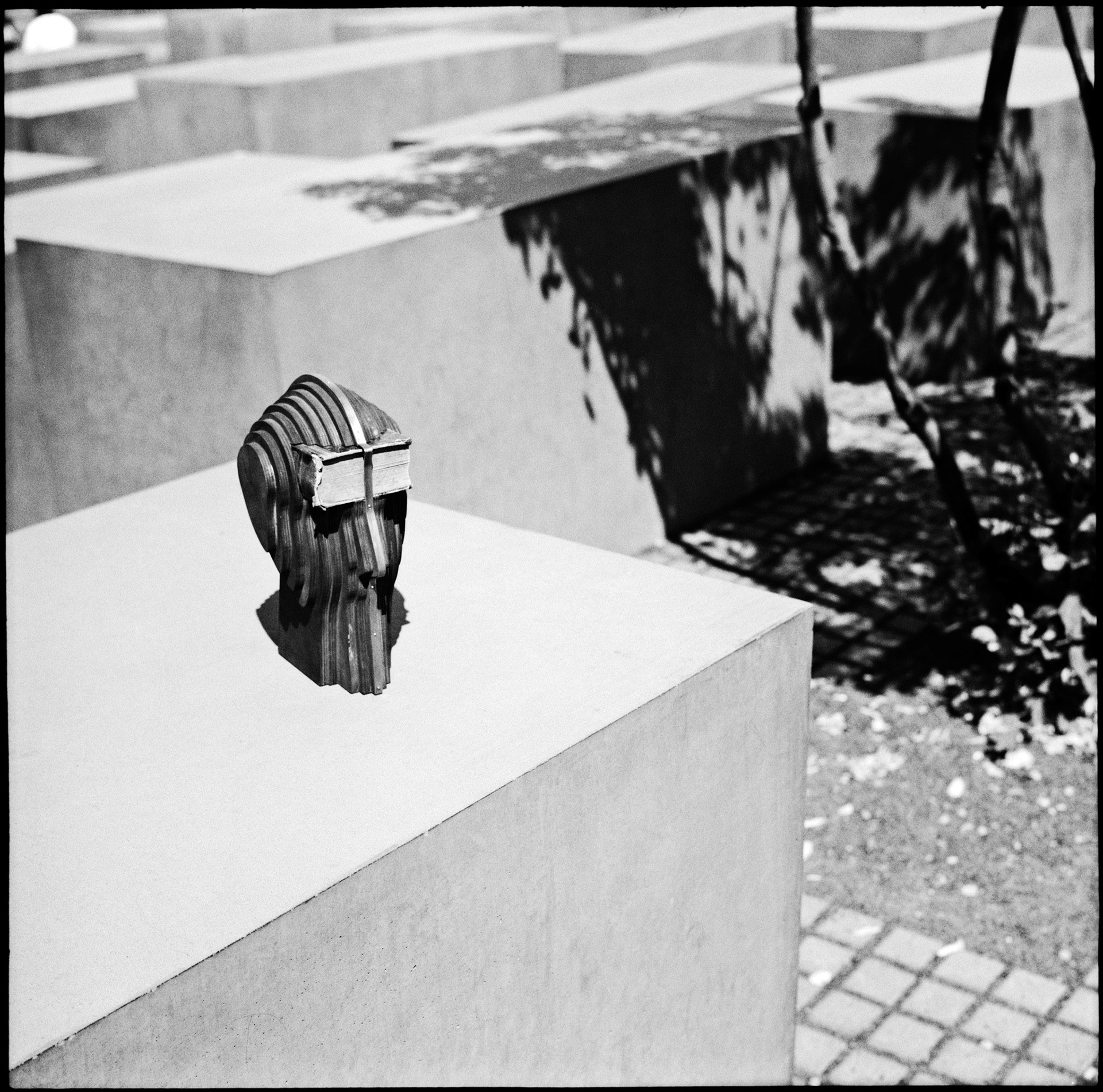
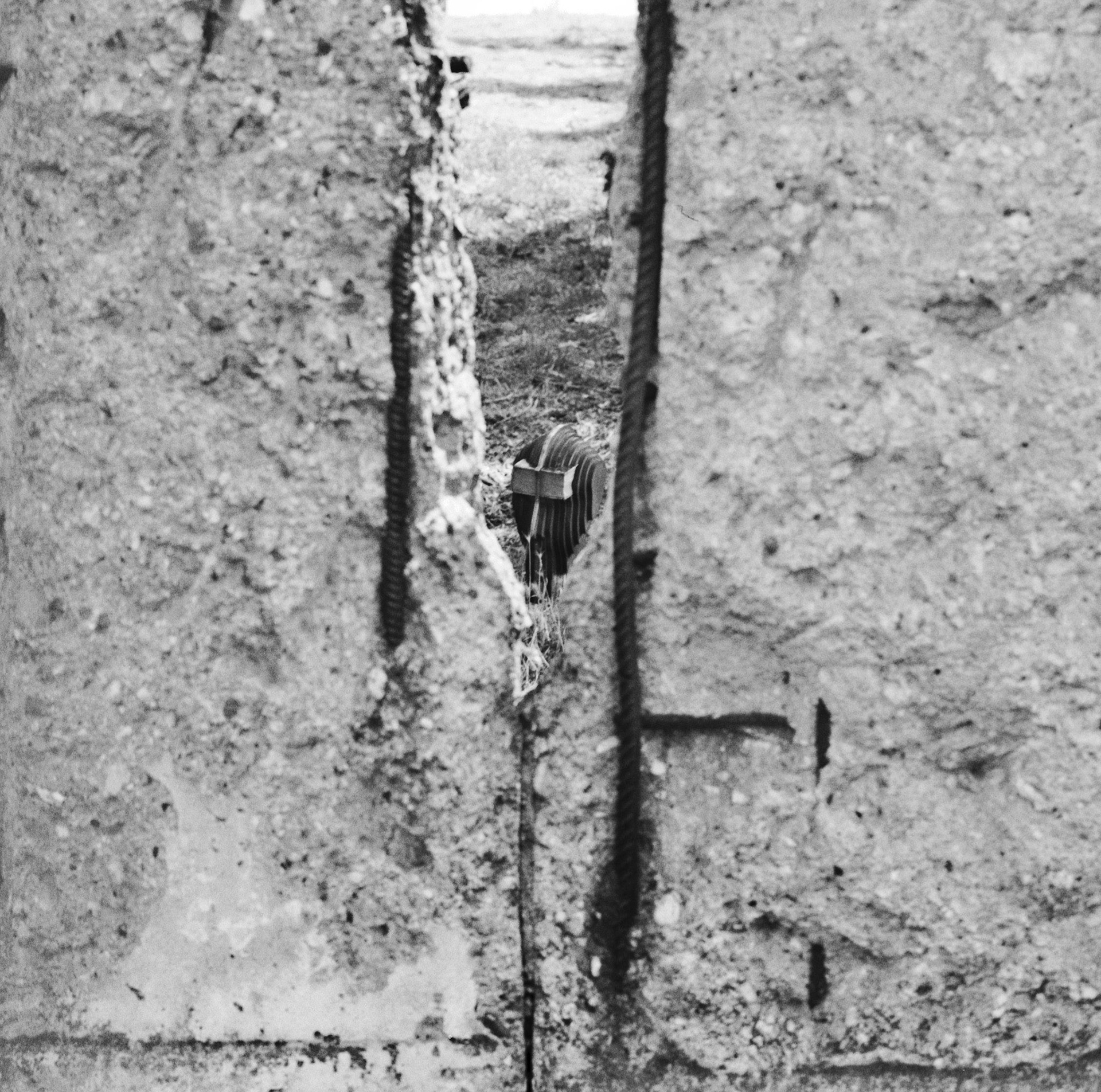
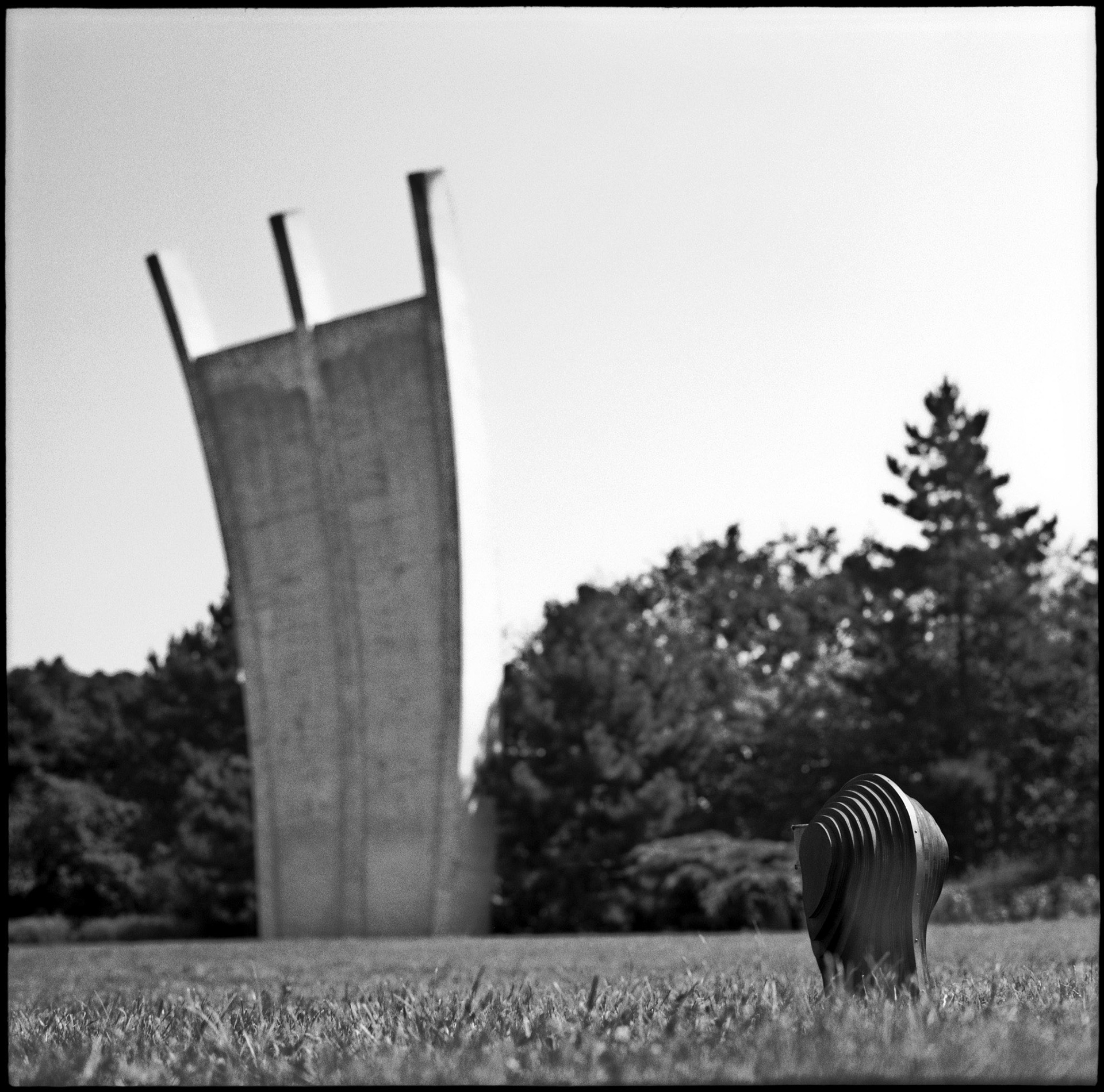
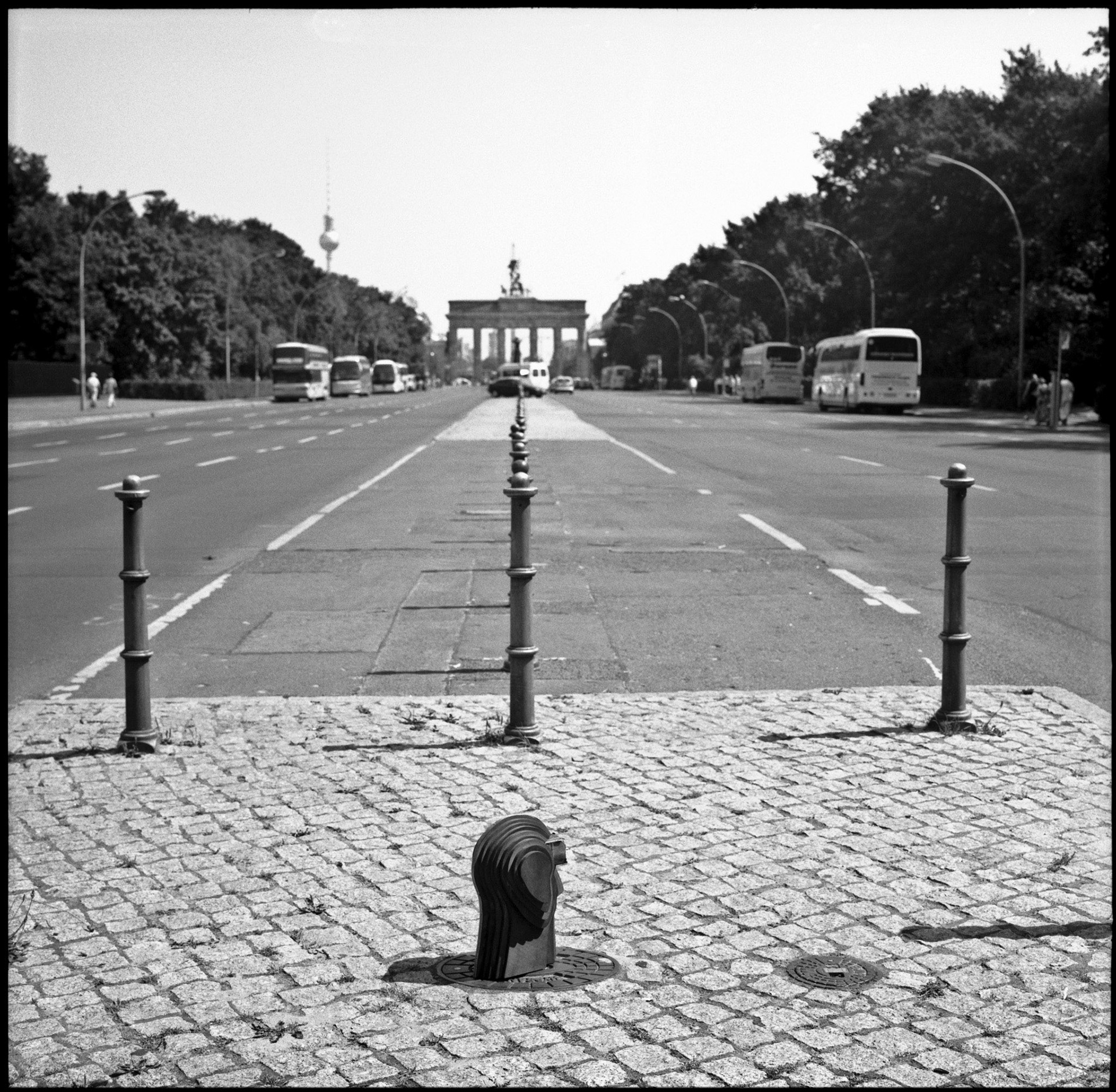
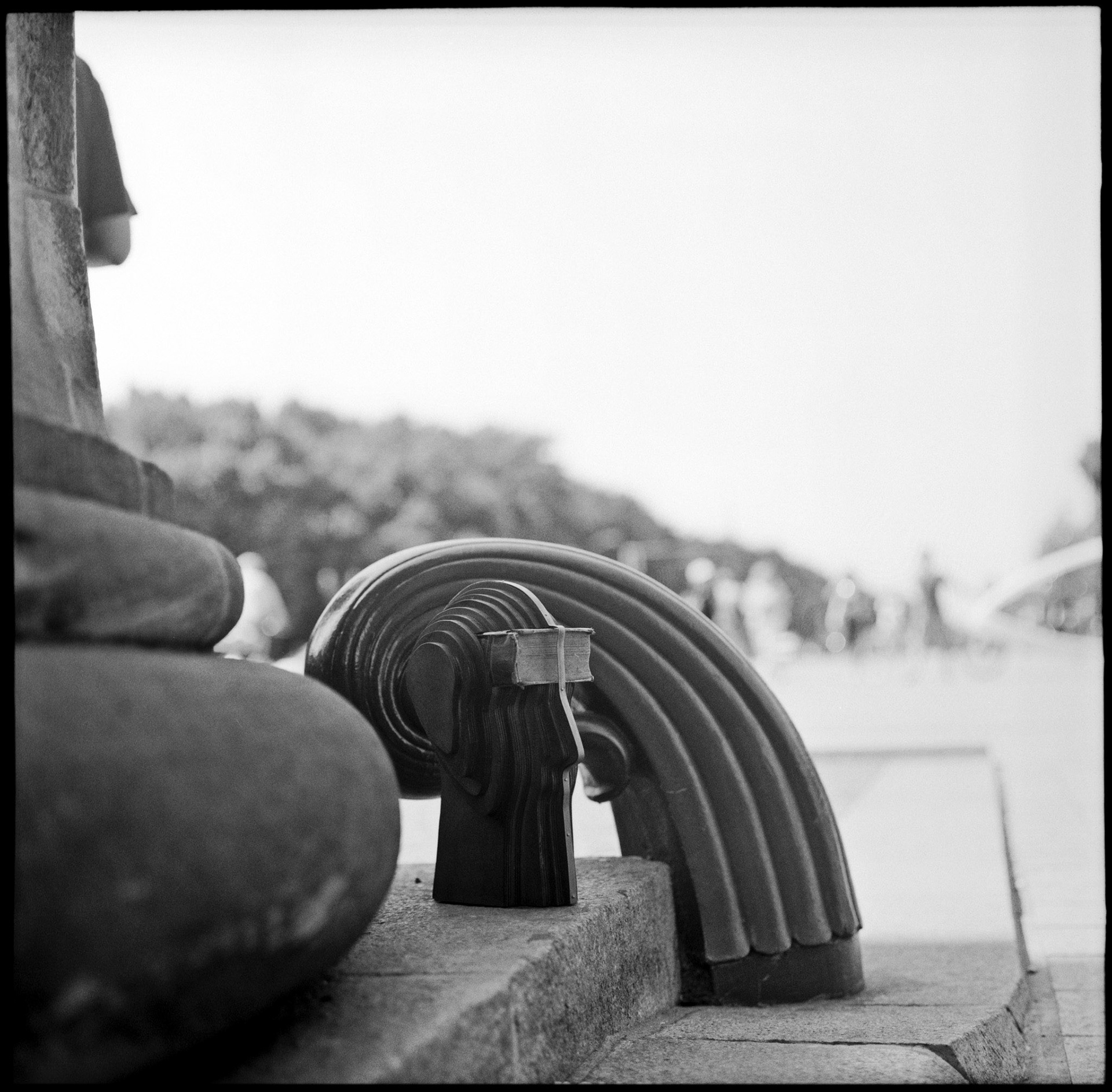
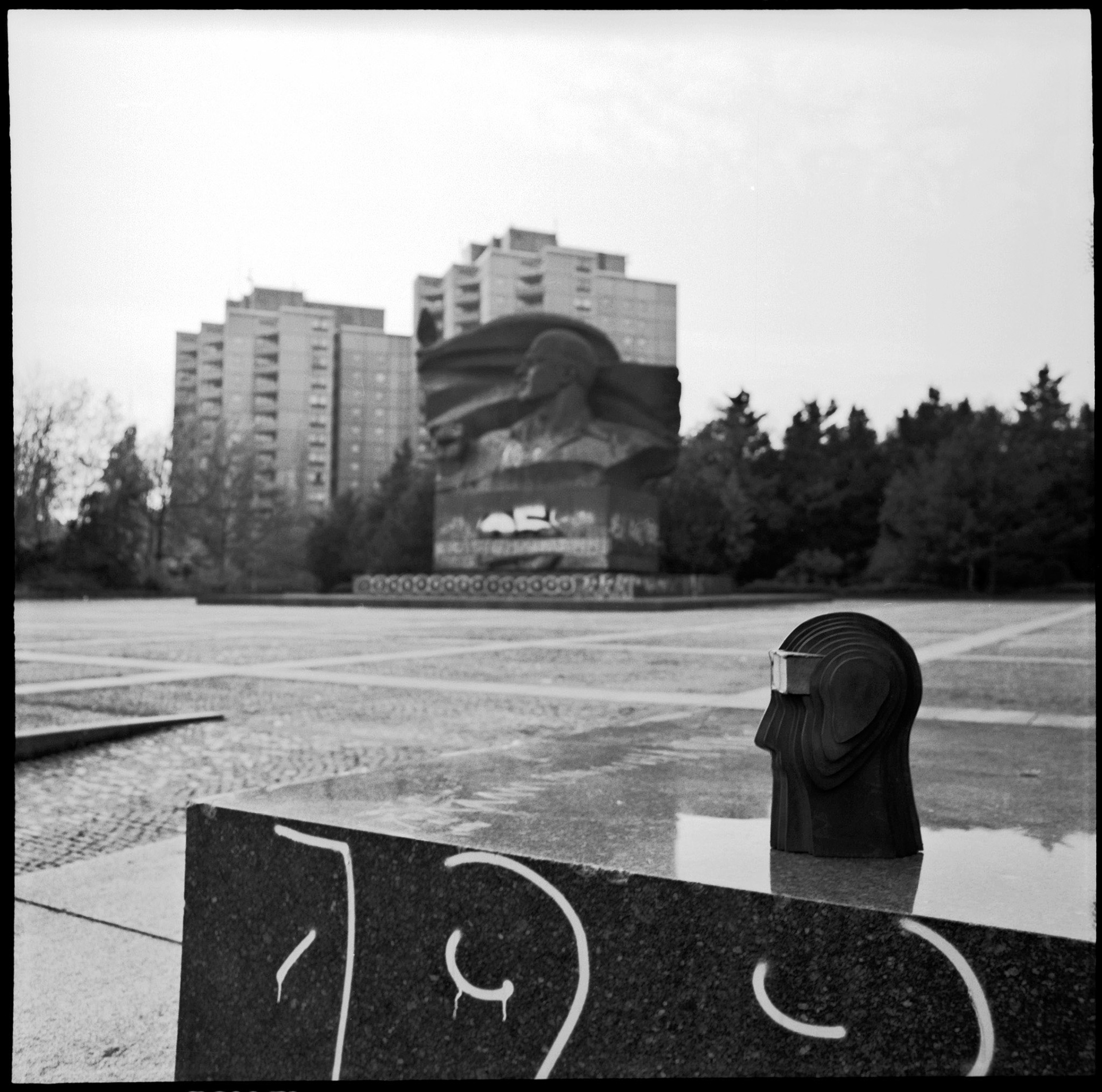
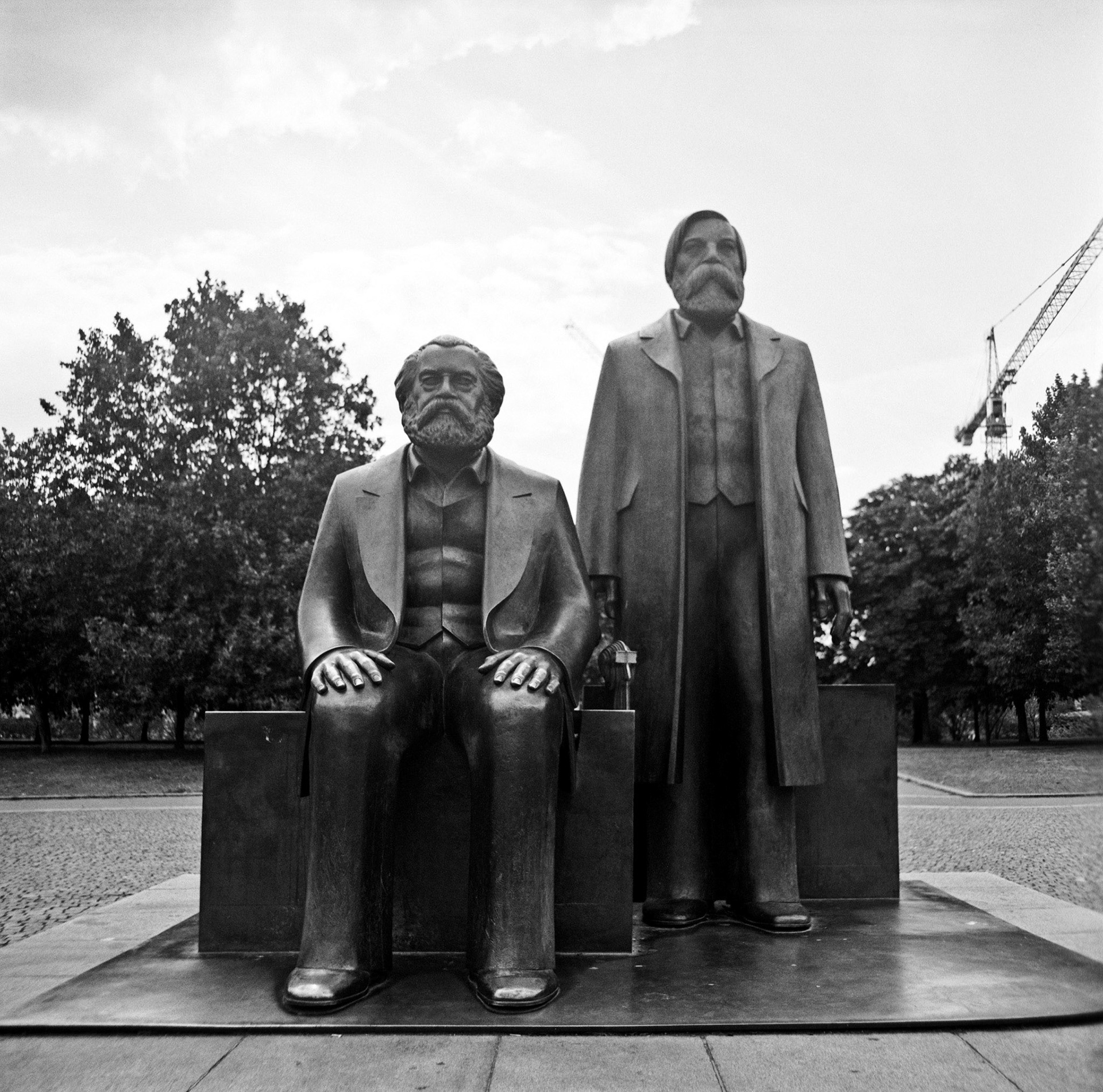
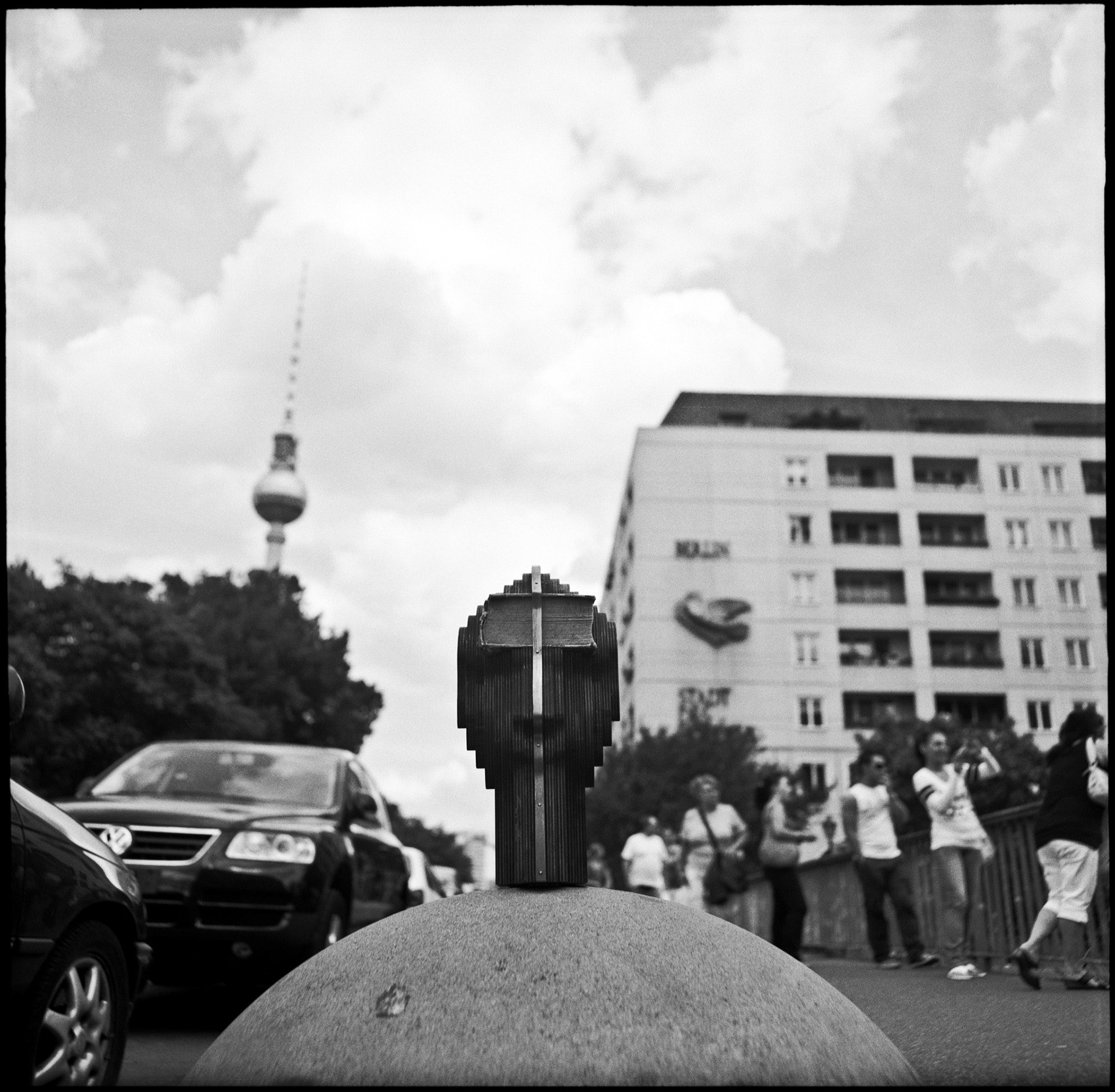
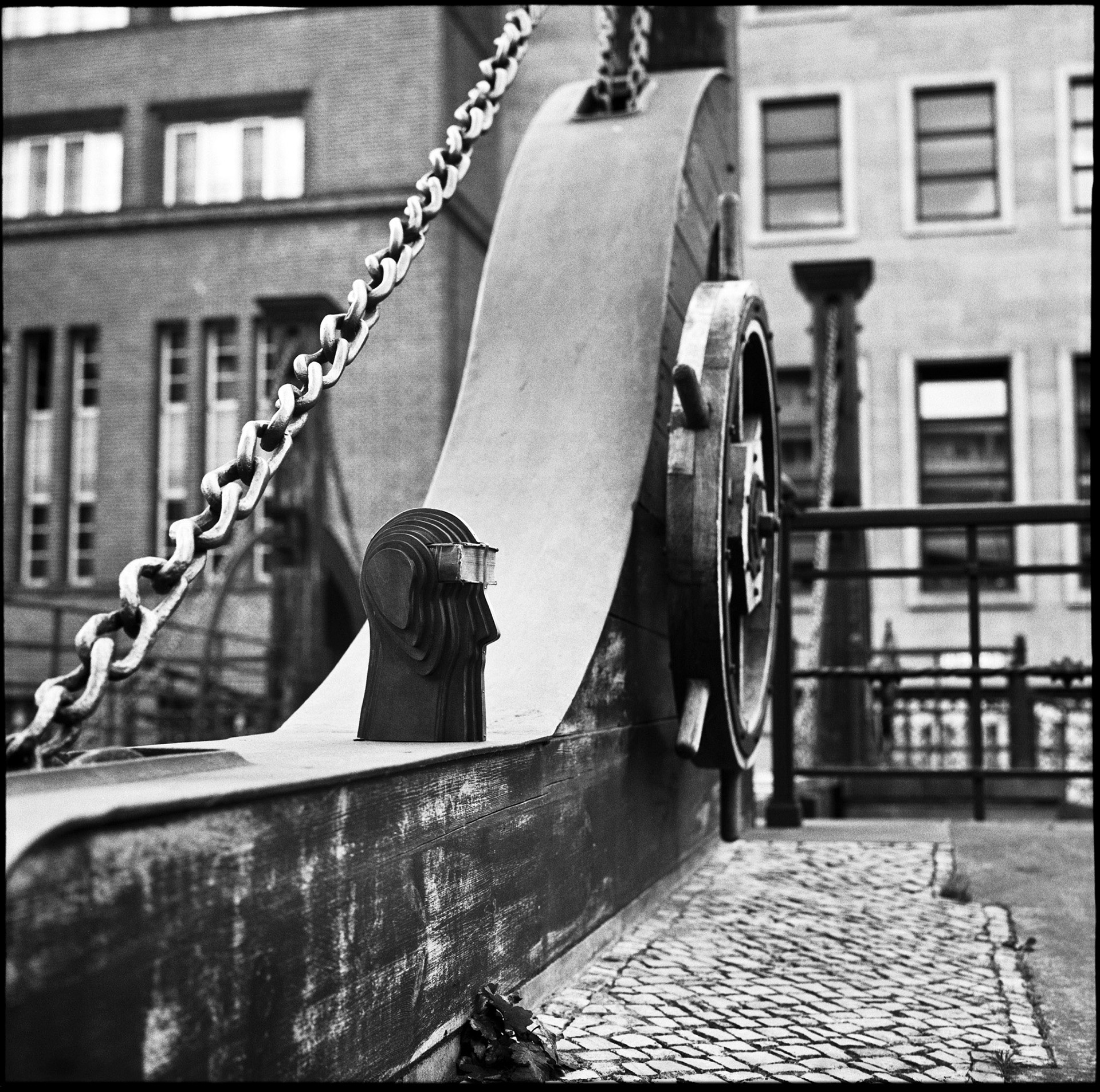
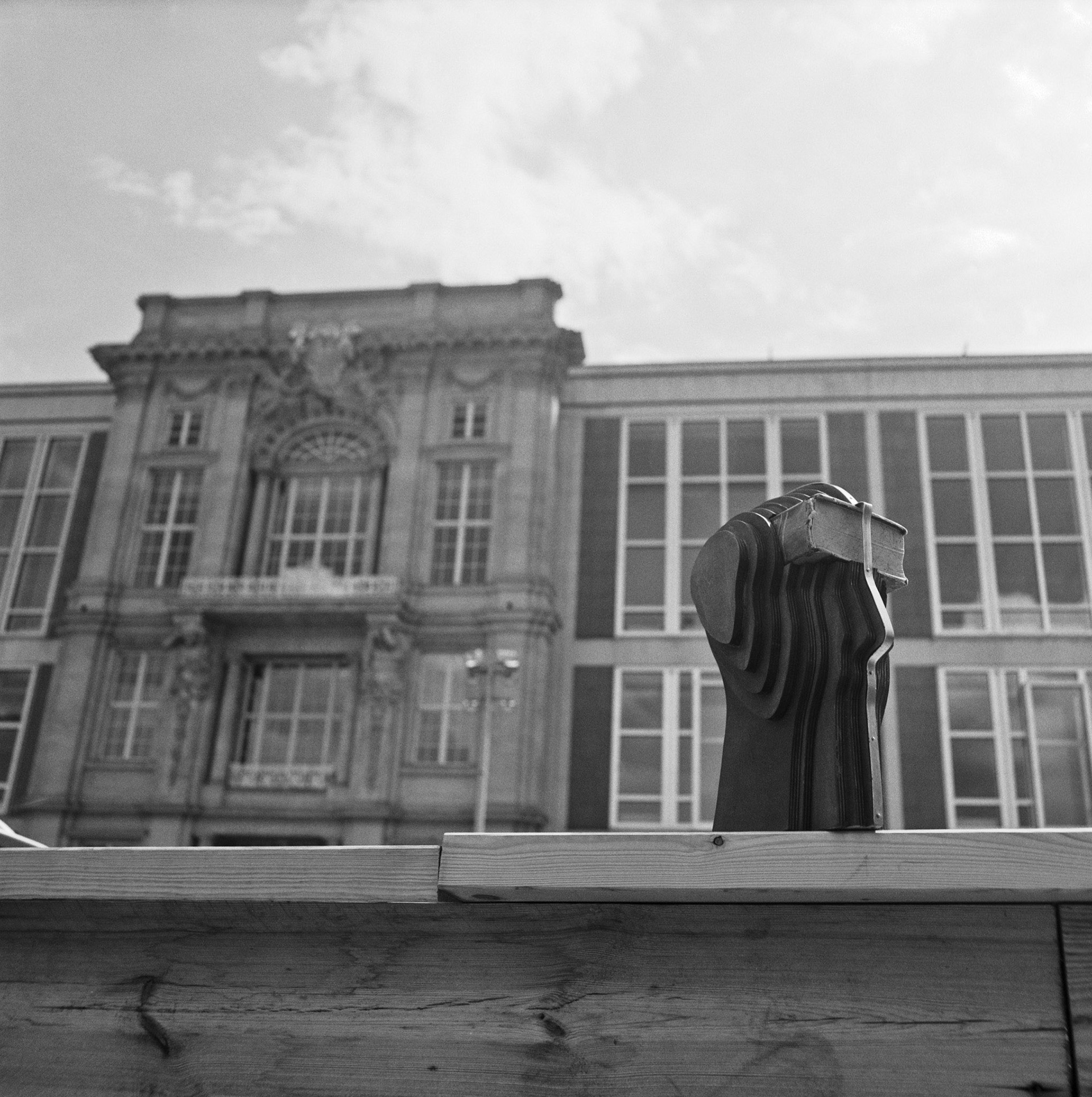
Diese Arbeit unternimmt eine Reise durch Berlin — aber nicht durch unsere Augen. Sie zeigt eine Kopf-Skulptur des Berliner Künstlers Wolfgang Nieblich, „Der Übersetzer" oder „Kopf XXXVIII" (Werkverzeichnis-Nr. WZ 035/2006), an wechselnden Orten der Stadt. Die Bilder geben nicht den Blick des Kopfes wieder, sondern seinen Ort — und lesen aus diesem Ort den Standpunkt, den er einnimmt. Der Übersetzer übersetzt, was ihn umgibt — und Übersetzung ist nie bloße Übertragung.
Leibniz nannte den Standpunkt das, was eine Welt überhaupt erst zur Welt macht: Jede Monade drückt das Ganze aus, doch aus einem einzigen, unvertauschbaren Ort. Der Standpunkt geht dem Blick voraus — einen Ort einzunehmen heißt bereits, eine Perspektive zu behaupten, auch ohne Auge. Der Übersetzer ist eine solche Monade. Allein dadurch, dass er irgendwo steht, faltet er die Stadt in einen Punkt, der nicht der unsere ist. Und so kehrt sich das Verhältnis um, das ein Gesicht sonst bestimmt: Ein Kopf, eine Skulptur ist gewöhnlich das, was angeschaut wird — hier bleibt er im Bild sichtbar und wird zugleich zum Träger eines Standpunkts. Das Betrachtete wird als Betrachtendes mitgelesen; die Gesichtlichkeit dreht sich um ihre Achse.
Indem die Skulptur in der Stadt platziert und ihr Standpunkt gedeutet wird, verlässt das Bild den gewohnten Ort des menschlichen Sehens. Berlin wird deterritorialisiert: herausgelöst aus dem aufrechten, beiläufigen Blick, den wir der Stadt entgegenbringen. Der Betrachter gerät in ein Werden — ein Werden-anderes, in dem er für einen Moment nicht mehr der souveräne Blick über den Dingen ist, sondern die Stadt von einem Ding aus liest, das mitten in ihr steht. In dieser Verschiebung werden Sehenswürdigkeit und unbedeutender Platz einander gleich: Das Wahrzeichen verliert seinen Vorrang, der beliebige Ort gewinnt Würde. Es ist die Aufwertung des Beliebigen, des *espace quelconque* — jenes Raums, dem die Bilder eine Aufmerksamkeit schenken, die das alltägliche Sehen ihm verweigert.
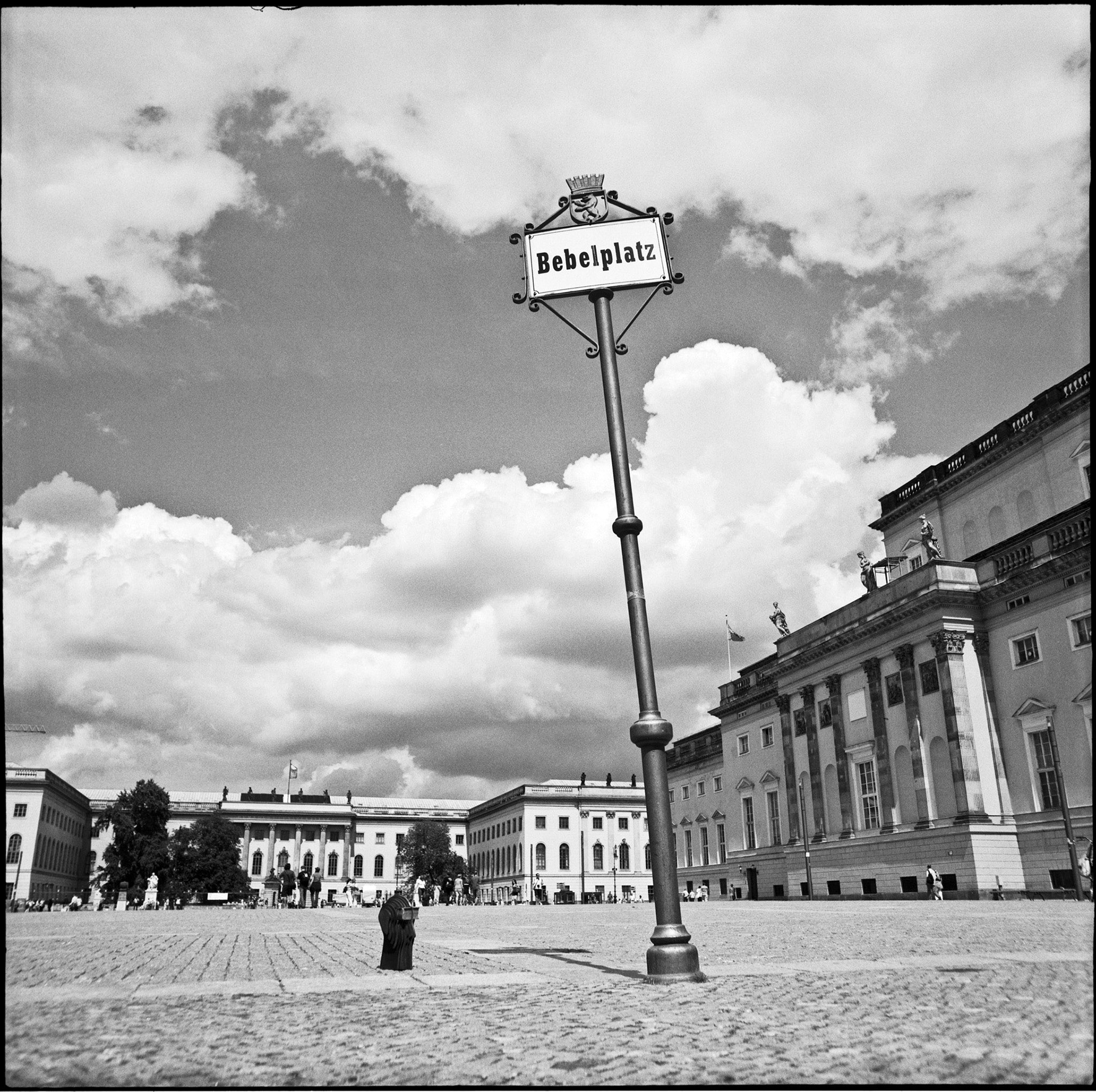
Die Fotografien entstanden 2008 und 2010 auf Schwarz-Weiß-Film, aufgenommen mit einer Rolleiflex und einer Pentacon Six — einer Kamera aus DDR-Produktion. Auch das gehört zur Konstruktion: ein Berlin, gesehen mit einem Instrument der einst geteilten Stadt, in einem Schwarz-Weiß, das der Stadt die touristische Farbe nimmt und sie auf Form, Licht und Struktur zurückführt. Die Konstruktion liegt hier nicht in der Montage, sondern im gewählten, verschobenen Standpunkt selbst. Konstruktivistisch im strengen Sinn ist die Setzung: Nicht das Motiv ist das Werk, sondern die Entscheidung über den Ort des Kopfes und die Deutung des Standpunkts, der sich aus diesem Ort ergibt.
Eine Übersetzung gibt das Original nie unverändert zurück; sie erzeugt im Übertragen eine Differenz. Was der Übersetzer uns reicht, ist darum kein Abbild Berlins, sondern ein fremd gewordenes Berlin — und gerade in dieser Befremdung zum ersten Mal wirklich gesehen. Diese Reise ist „nicht kopflos": nicht plan- und besinnungslos, sondern ein methodisch verschobener Standpunkt. Und doch verlangt sie, den eigenen Blick für einen Moment dem eines fremden Kopfes anzuvertrauen — dem des Übersetzers —, um die Stadt überhaupt sehen zu können.
ENGLISH
This work undertakes a journey through Berlin — but not through our eyes. It shows a head-sculpture by the Berlin artist Wolfgang Nieblich, "Der Übersetzer" (The Translator) or "Kopf XXXVIII" (Head XXXVIII), catalogue raisonné no. WZ 035/2006, at changing locations across the city. The images do not render the head's gaze, but its place — and read, from that place, the standpoint it takes. The Translator translates what surrounds him — and translation is never mere transfer.
Leibniz called the standpoint that which first makes a world a world at all: every monad expresses the whole, yet from a single, irreplaceable place. The standpoint precedes the gaze — to occupy a place is already to assert a perspective, even without an eye. The Translator is such a monad. By the mere fact of standing somewhere, he folds the city into a point that is not our own. And so the relation that otherwise governs a face is reversed: a head, a sculpture is ordinarily that which is looked at — here it remains visible within the image and at the same time becomes the bearer of a standpoint. What is observed is read at once as observing; faciality turns upon its own axis.
By placing the sculpture in the city and interpreting its standpoint, the image leaves the customary place of human seeing. Berlin is deterritorialised: detached from the upright, incidental gaze we direct at the city. The viewer enters a becoming — a becoming-other, in which, for a moment, he is no longer the sovereign gaze above things, but reads the city from a thing that stands in its midst. In this displacement, landmark and insignificant place become equal: the monument loses its precedence, the arbitrary site gains dignity. It is the elevation of the arbitrary, of the *espace quelconque* — that any-space-whatever to which the images grant an attention everyday seeing denies it.
The photographs were taken in 2008 and 2010 on black-and-white film, with a Rolleiflex and a Pentacon Six — a camera of GDR manufacture. This too belongs to the construction: a Berlin seen with an instrument of the once-divided city, in a black-and-white that strips the city of its touristic colour and returns it to form, light, and structure. The construction lies here not in montage, but in the chosen, displaced standpoint itself. Constructivist in the strict sense is the act of positing: it is not the motif that is the work, but the decision about the place of the head and the interpretation of the standpoint that arises from that place.
A translation never returns the original unchanged; in transferring, it produces a difference. What the Translator hands us is therefore no likeness of Berlin, but a Berlin made strange — and precisely in this estrangement seen, for the first time, truly. This journey is *nicht kopflos* — not headless, not heedless, but a methodically displaced standpoint. And yet it demands that we entrust our own gaze, for a moment, to that of a foreign head — the Translator's — in order to see the city at all.