DEUTSCH
Der dritte Akt ist kein Schluss — ein Werden kennt kein Ziel, an dem es zur Ruhe käme. Aber er ist die Stelle, an der die beiden Identitäten, die der erste Akt benannte und der zweite als zwei Reste an derselben Linie zeigte, nicht länger getrennt bleiben. Hier werden sie in ein einziges Bild gefaltet.
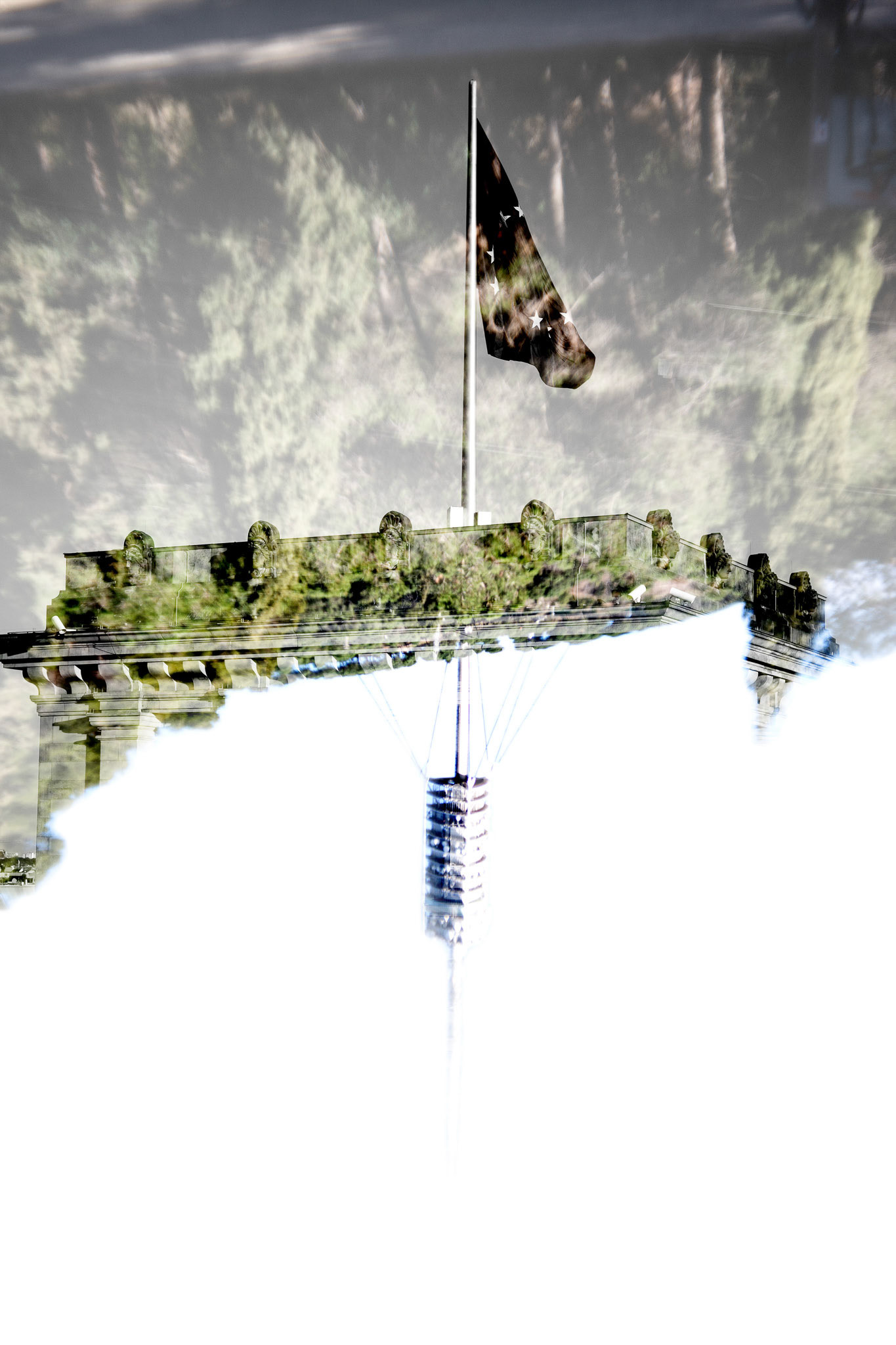
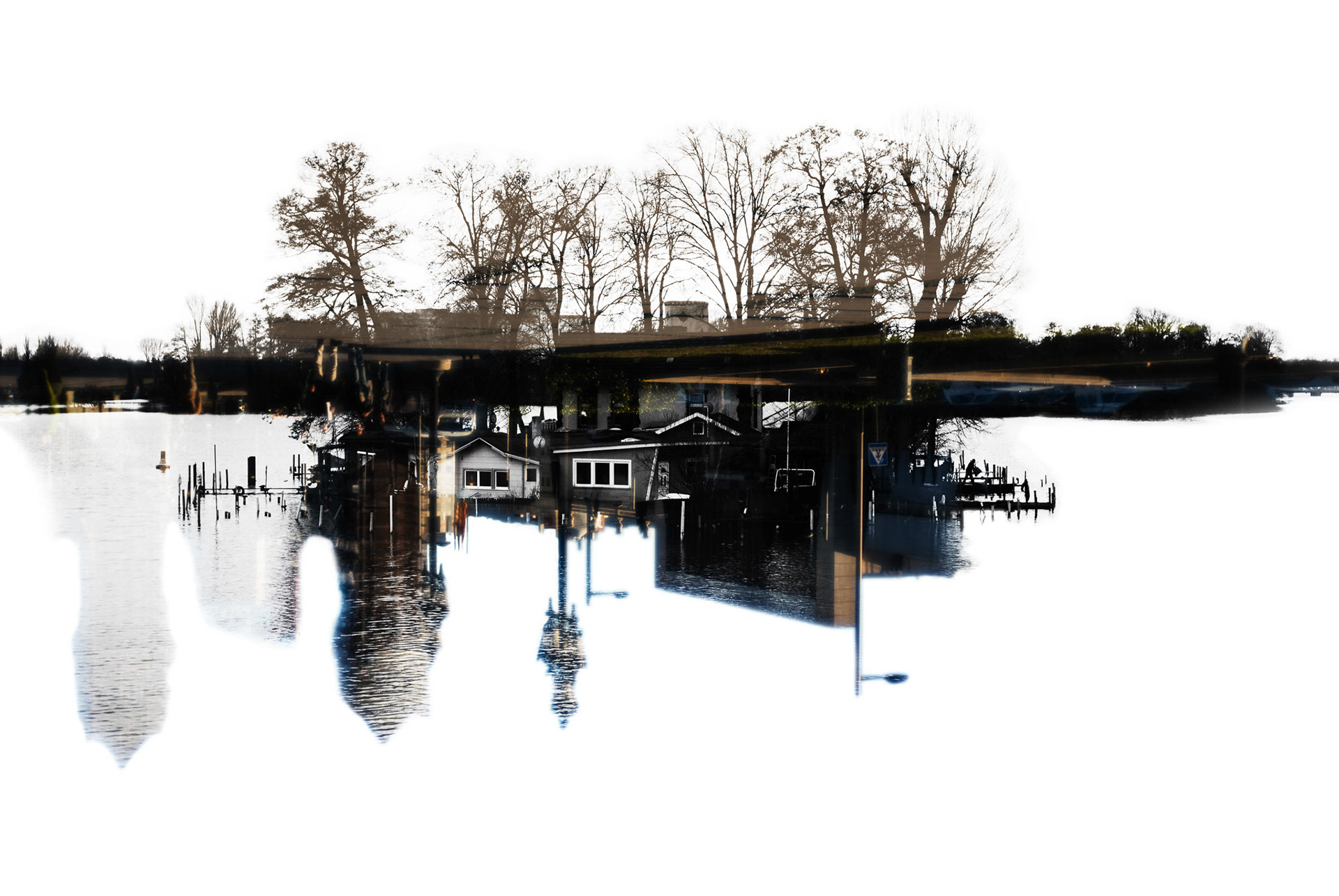
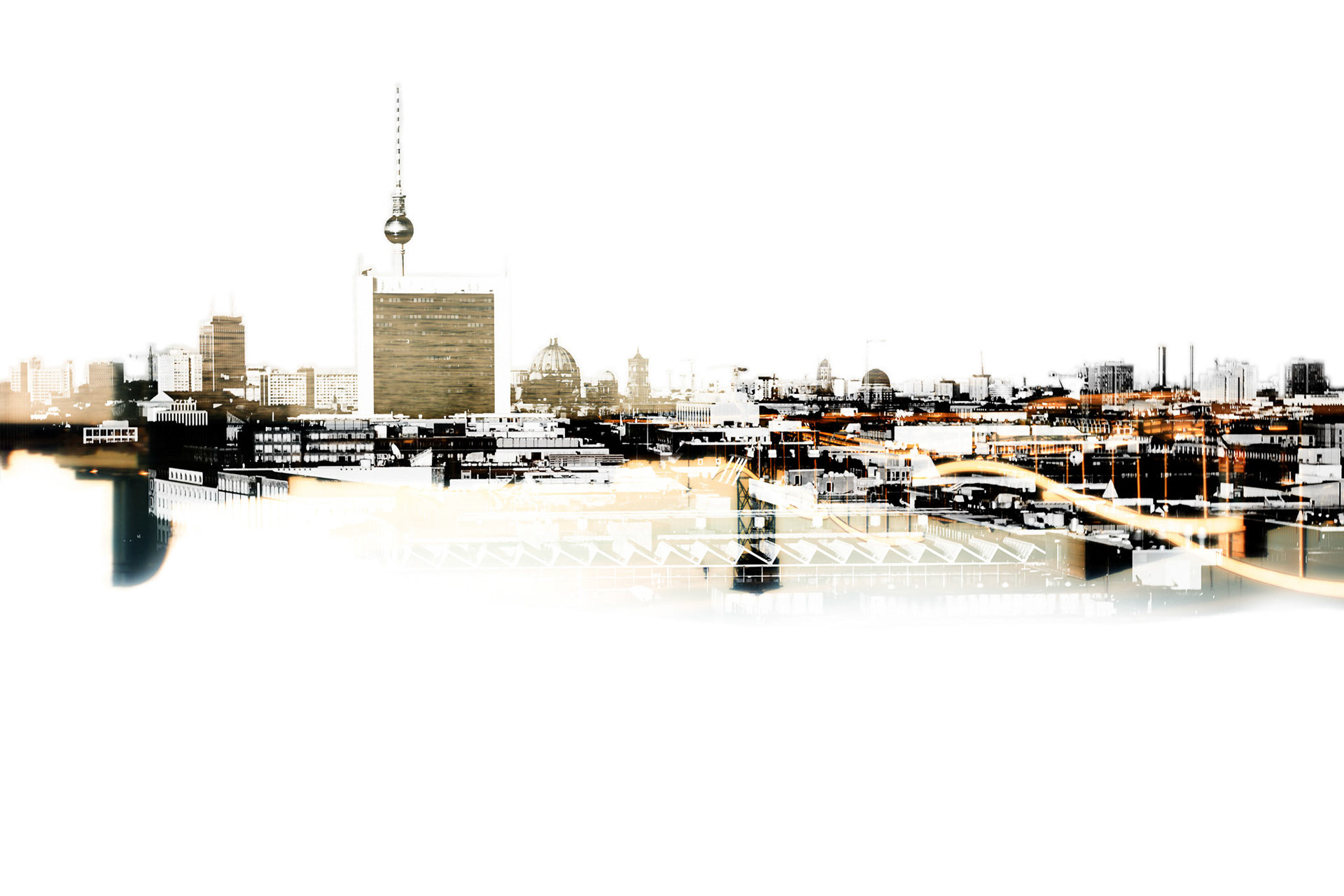
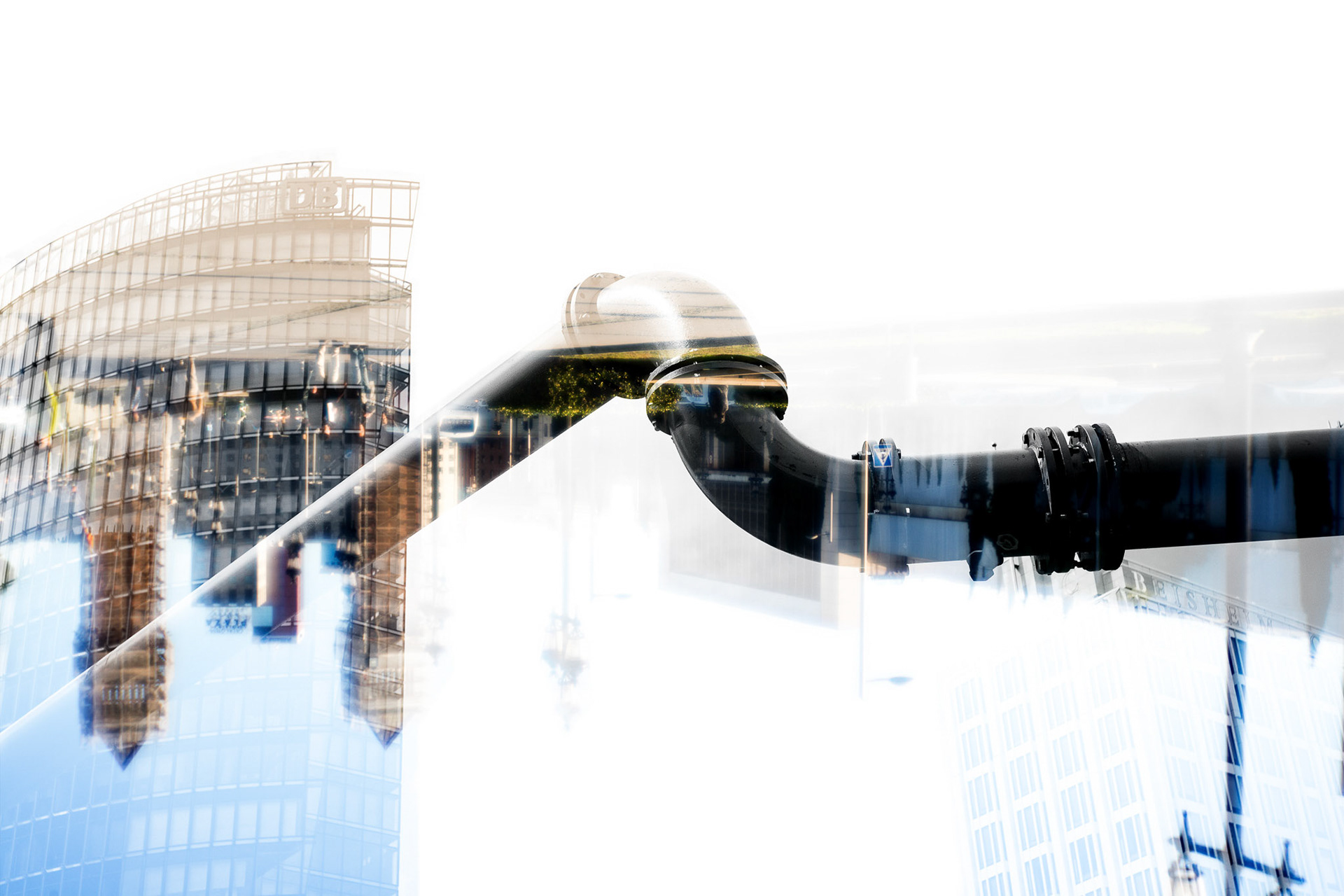
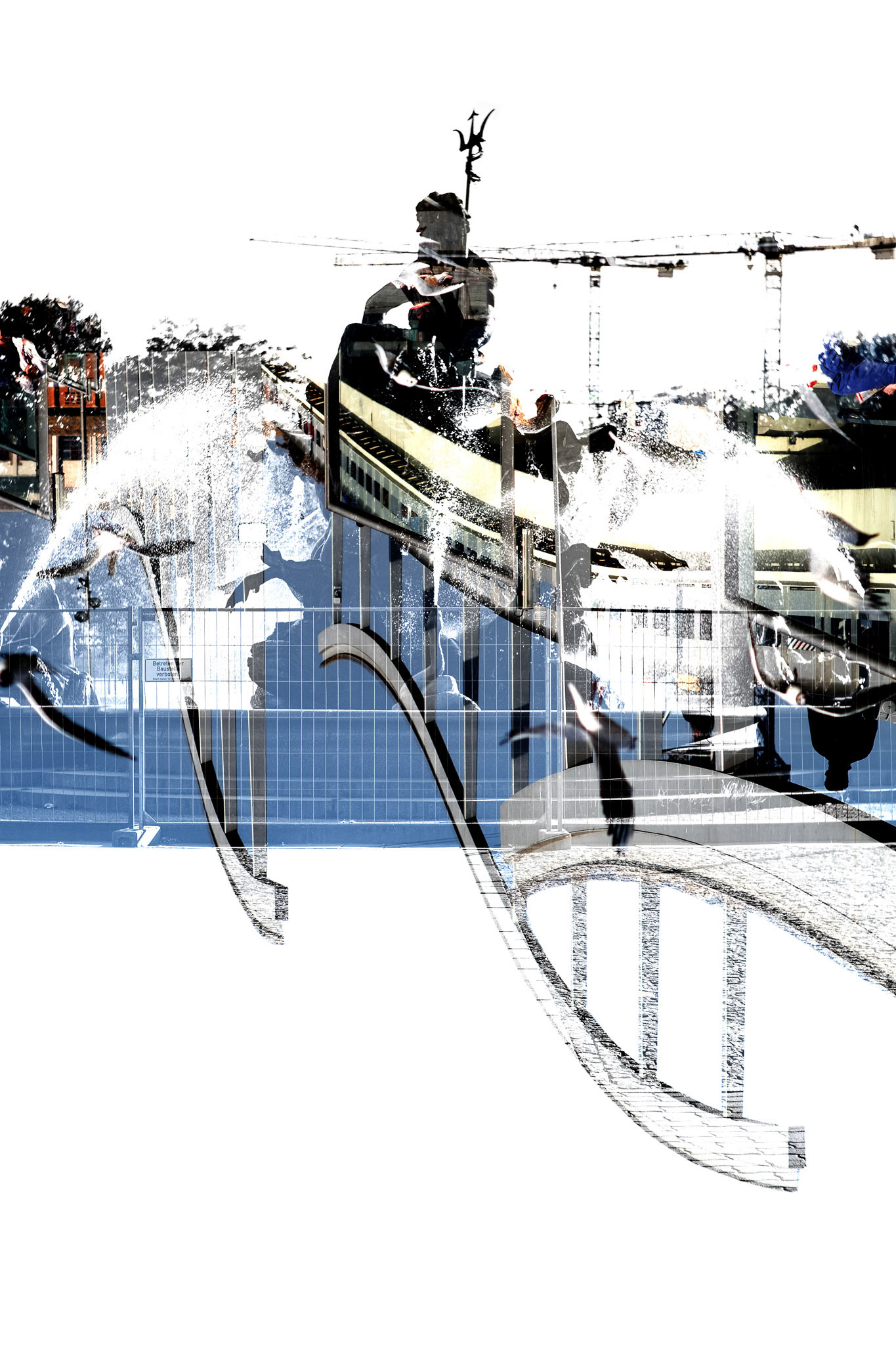
Diese Identitäten haben nun Namen, und es sind Ortsnamen: Berlin und Barcelona — die beiden Städte, in denen Hollstein lebt. Jede Konstruktion legt sie übereinander. Berlin erscheint in Farbe — der Fernsehturm, die Kuppel des Doms, die Glastürme am Potsdamer Platz, ein deutsches Bauzaun-Schild —, Barcelona in Schwarz-Weiß. Zwei Orte, ein Bild.
Das Verfahren ist die Doppelbelichtung, und es ist hier mehr als Technik: Es ist die Form der Versöhnung selbst. Wie in den constructed realities liegen zwei Aufnahmen nicht nebeneinander, sondern ineinander — eine Falte, in der zwei Welten denselben Bildraum teilen, ohne zu einer zu verschmelzen. Farbe und Schwarz-Weiß halten die beiden Städte unterscheidbar; die Belichtung hält sie untrennbar.
Deleuzisch ist das die Antwort auf die Frage des ersten Akts. Das Selbst muss nicht zwischen zwei Zugehörigkeiten wählen — es ist die Falte beider. Keines der Bilder ist mehr eindeutig Berlin oder eindeutig Barcelona; beide sind deterritorialisiert, aus ihrer Eindeutigkeit gelöst und zu einem Dritten geworden, das es nur im Bild gibt. Die Versöhnung der zwei Identitäten ist keine Verschmelzung zu einer, sondern das Aushalten — und hier: das Konstruieren — ihrer Zweiheit.
So setzt sich im dritten Akt die Philautia durch: nicht als erreichter Zustand, sondern als Haltung, die in jeder Konstruktion neu eingenommen wird. Das authentische Ich ist kein Ort, zu dem man zurückkehrt, sondern die Bewegung zwischen zwei Orten — beide bejaht, beide zu Hause. Philautia ist kein Zustand. Sie ist ein Werden — und es trägt zwei Namen.
ENGLISH
The third act is no ending — a becoming knows no goal at which it would come to rest. But it is the place where the two identities, which the first act named and the second showed as two remnants on the same line, no longer remain apart. Here they are folded into a single image.
These identities now have names, and they are place-names: Berlin and Barcelona — the two cities in which Hollstein lives. Each construction lays them one over the other. Berlin appears in colour — the television tower, the cathedral's dome, the glass towers of Potsdamer Platz, a German construction-site sign — Barcelona in black-and-white. Two places, one image.
The method is double exposure, and here it is more than technique: it is the very form of the reconciliation. As in the constructed realities, two exposures lie not side by side but within one another — a fold in which two worlds share the same pictorial space without merging into one. Colour and black-and-white keep the two cities distinguishable; the exposure keeps them inseparable.
Read through Deleuze, this is the answer to the question of the first act. The self need not choose between two belongings — it is the fold of both. None of the images is any longer unambiguously Berlin or unambiguously Barcelona; both are deterritorialised, no longer simply what they were, and become a third thing that exists only in the image. The reconciliation of the two identities is no merging into one, but the enduring — and here: the constructing — of their twoness.
Thus, in the third act, philautia prevails: not as a state attained, but as a stance taken anew in each construction. The authentic self is no place to which one returns, but the movement between two places — both affirmed, both home. Philautia is not a state. It is a becoming — and it bears two names.